The presentation starts. The brand team listens politely. They nod their heads. They pose a few questions. Then one of them says, “So, define exclusivity.”
Someone from the property side pulls out a category tier chart. Someone else explains that other category competitors will be blocked. But the brand people still look puzzled.
What they’re also asking is, “What do we get that no one else gets?
Properties depend on exclusivity to justify higher priced tiers. When exclusivity is only a competitor block instead of an intentional design choice, it’s just not enough.
It’s not that sponsorship exclusivity doesn’t work, it just works differently than it used to.
Today’s most effective exclusive sponsorships aren’t just about fencing off category competitors, they’re about access, focus, and clarity. If you design an exclusive partnership with intention, it becomes one of the best ways to differentiate tiers and protect premium tier value.
That’s what this article is about. We’ll look at real examples of effective exclusive sponsorships that and how to use exclusivity as a strategic tool when designing tiers.
Misunderstood and Underutilized
Exclusivity is one of the oldest ideas in sponsorship. It’s also one of the most misunderstood.
For years, exclusivity meant one thing: you’re the only brand in your category. That approach made sense when sponsorships were valued mostly for visibility.
Times have changed and exposure isn’t everything. Marketing teams are pressured to justify spend, show learning, and connect sponsorships to broader marketing goals. Exclusivity hasn’t disappeared, but the reason brands pay for it has evolved.
Today, exclusivity matters when it creates focus, access, or advantage. When it unlocks something meaningful, exclusivity becomes one of the strongest levers in a sponsorship package.
Exclusivity Still Matters, But Not the Way It Used To

There was a time when sponsorship exclusivity was like a "keep out" sign. If a soft drink brand signed a deal with a stadium, they just wanted to make sure their rival’s logo wasn't anywhere to be seen. It was a defensive move.
Today things are shifting. Exclusive partnerships aren't just about keeping others out; they’re about letting the right brand in deeper. It’s less about "blocking" and more about "building." When you look at examples of exclusive partnership today, the focus is on creating a seamless experience for the fans rather than just buying up exclusive ad space.
The Shift from Signage to Storytelling
Modern sponsorship success depends on how well a brand integrates into the fan's journey. Instead of just having "the official car" of a music festival, a brand might now own the entire "VIP Arrival Experience."
Here is why the old way of thinking about category exclusivity sponsorship is evolving:
- Quality Over Quantity: Brands no longer want to be one of fifty other logos on a banner. They would rather pay a premium for exclusive sponsorship rights in a specific area where they can talk to people.
- The Digital Overlap: In the past, exclusivity was physical. Now, it’s digital. A brand might want to be the sole provider of real-time stats on a team’s mobile app.
- Tiered Value: Smart sponsorship tier design has moved away from basic "Gold, Silver, Bronze" models. Premium sponsorship tiers offer unique access—like behind-the-scenes content—that a competitor simply can't replicate.
Why This New Approach Works
When you look at exclusive sponsor examples, the winners are the ones who use their status to add value. Think of a payment processor that provides the only "tap-to-pay" lanes at a massive food festival. They aren't just the exclusive partner; they are the reason the line moves faster.
By rethinking your sponsorship packages, you can move away from selling "space" and start selling "impact." This empowers the brand to become a hero in the eyes of the consumer. The higher the tier, the more "utility" the brand should provide to the audience.
In short, exclusivity is still the gold standard for sponsor benefits, but the goal is no longer just to be the only brand in the room. The goal is to be the only brand that matters to the fan in that moment.
The Problem with Default Category Exclusivity
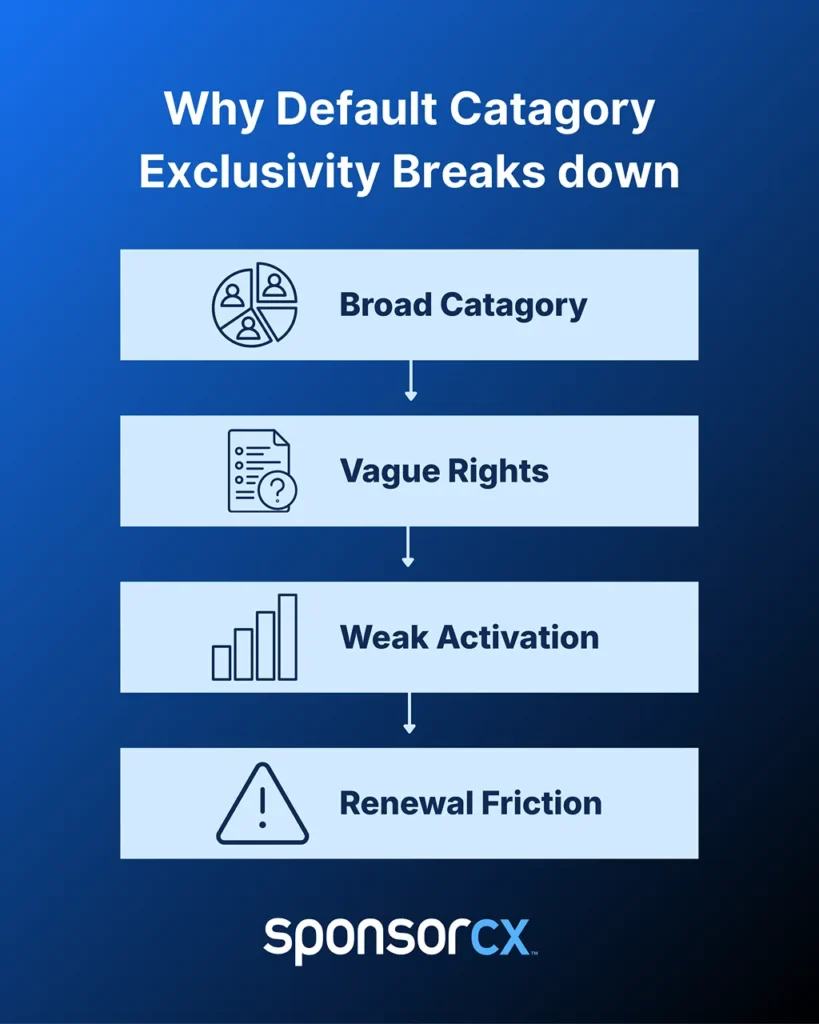
It’s tempting to treat category exclusivity sponsorship as a one-size-fits-all solution. For a long time, the standard approach was to grab a broad industry—like "Healthcare" or "Technology"—and lock it down for a single brand. While this feels like a win for the sponsor, leaning too heavily on default exclusivity can limit sponsorship success for both the property and the brand.
Broad categories are often too vague for today’s segmented market. When you give away exclusive sponsorship rights to a massive, catch-all category, you might be leaving money on the table and depriving your audience of better experiences.
Why Broad Categories Can Backfire
When sponsorship packages are designed with categories that are too wide, a few things happen:
- The "Dead Zone" Effect: If a "Dining" sponsor only focuses on fast food, but your exclusive partnershipsagreement prevents you from bringing in a coffee brand or a high-end restaurant, you end up with gaps in your fan experience.
- Stifled Innovation: When a brand feels it "owns" the building by default, they might not feel the need to innovate. The most successful real-world examples are those where the brand feels pushed to create something unique, not just sit on their hands because the competition is barred.
- Revenue Ceilings: By locking in a single "Bank" for everything from credit cards to mortgages to wealth management, you limit your sponsorship tier design. Often, it’s more lucrative to break those down into "Official Mortgage Partner" and "Official Credit Card," allowing two brands to shine in their specific niches.
Moving Toward "Smarter" Exclusivity
To improve sponsorship effectiveness, properties are moving away from "blanket" rights and taking a more surgical approach. As a result, more though must be focused on sponsorship tiers and levels.
- Micro-Categories: Instead of one "Automotive" partner, you might see an "Official Electric Vehicle" and an "Official Luxury SUV." This allows for more specific examples of exclusive partnership. It’s a practical approach to defining exclusivity without overly broad categories.
- Activation-Based Rights: A brand might have exclusive sponsorship rights over the "Kid’s Zone" or the "Digital Replay," rather than the entire stadium's tech category.
- Defined Benefit Windows: Ensuring that sponsor benefits are tied to specific goals helps prevent a brand from "squatting" on a category without actually engaging the fans.
When you look at modern exclusive sponsor examples, the focus is on depth rather than breadth. The goal is to ensure that premium sponsorship tiers feel earned through active engagement, rather than just being a result of a restrictive contract. By tightening up your definitions, you create more room for variety, more revenue streams, and a much more vibrant experience for everyone involved.
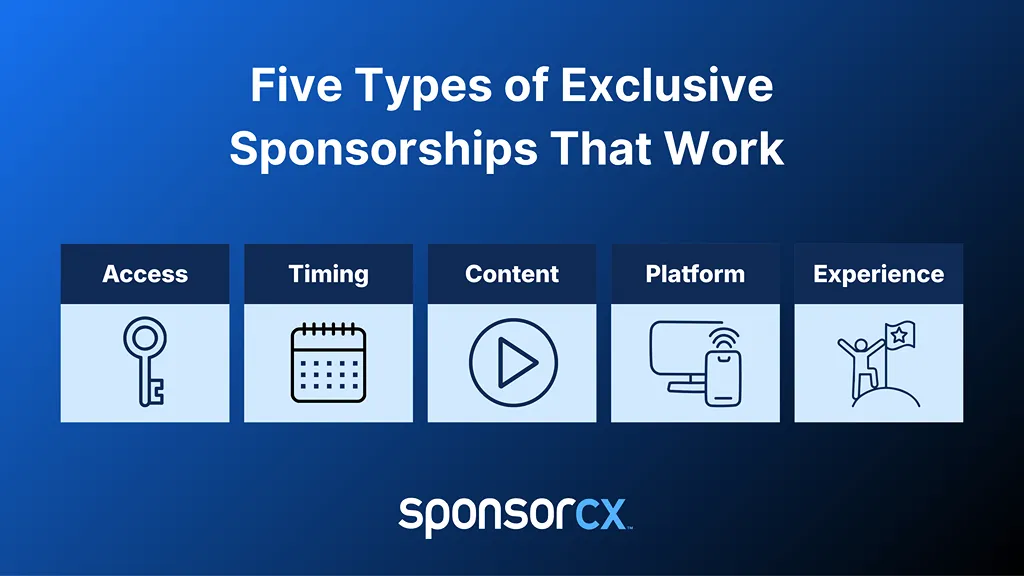
5 Types of Exclusive Sponsorships That Work
Choosing the right structure for exclusivepartnerships is like setting the foundation for a house. Get it right and everything else—the branding, the activation, the fan engagement—stands up beautifully. If it’s too broad or too flimsy, the whole thing can wobble.
To achieve true sponsorship success, you have to move past the idea that exclusivity is just a line item in a contract. When used correctly, it creates a "win-win-win" for the property, the brand, and the audience. Here are five proven examples of exclusive partnership models that deliver real value.
1. Access-Based Exclusive Sponsorships
Access is one of the most powerful forms of exclusivity. It provides a sponsor proximity others don't get.
This can include:
- Exclusive access to fan data opt-ins
- Private meet-and-greets or behind-the-scenes moments
- Early or priority access to ticket buyers, members, or subscribers
Why it works:
- Access-based exclusive partnerships create usable value
- Sponsors can activate in ways that feel personal, not promotional
- The benefit is easy to explain internally and externally
From a sponsorship tier design standpoint, access exclusivity fits naturally in premium sponsorship tiers. It creates a clear step up without adding clutter to sponsorship packages.
2. Activation Window Exclusivity
Timing-based exclusivity focuses on when a sponsor can act, not just where they appear.
Examples include:
- First-to-market activation rights
- Exclusive launch windows around key moments
- Priority access to new initiatives or formats
Why it works:
- Brands value being first more than being alone
- Activation window exclusivity creates urgency and momentum
- It supports sponsorship effectiveness without permanent restrictions
This type of exclusivity works well across sponsorship tiers and levels because it can be limited, rotated, or refreshed. It also avoids the rigidity that often comes with category exclusivity sponsorship.
3. Content and Storytelling Exclusivity
Content exclusivity gives a sponsor ownership of a narrative, not just placement.
This might include:
- Exclusive presenting rights to a content series
- Sole sponsorship of a specific storyline or theme
- Long-term ownership of a recurring format
Why it works:
- It gives sponsors consistent visibility tied to meaning
- It supports deeper storytelling and better recall
- It aligns with how brands plan campaigns across channels
Content-based exclusive sponsorship rights are often easier to renew because the format can evolve while the core relationship stays intact.
4. Platform or Channel Exclusivity
Platform exclusivity limits sponsorship presence within a specific channel rather than across the entire property.
Examples include:
- Exclusive sponsorship of a mobile app or email program
- Sole brand presence on a livestream or digital feature
- Exclusive partner within an on-site interactive experience
Why it works:
- It aligns with how audiences consume content
- Sponsors can tailor messaging to the channel
- It reduces noise without blocking entire categories
From a tier design perspective, platform exclusivity helps differentiate sponsorship packages in a clean, modern way. It also gives properties flexibility as platforms evolve.
5. Experience-Driven Exclusive Sponsorships
Experience exclusivity centers on participation instead of promotion.
This can include:
- Exclusive hospitality experiences
- Hands-on activations only one sponsor can offer
- Custom moments tied to key audiences or milestones
Why it works:
- Experiences create memories, not just exposure
- Sponsors gain meaningful engagement opportunities
- The value is felt by both the sponsor and the audience
Experience-based examples often drive strong sponsor benefits because they feel tangible and human. They also support sponsorship success by giving brands something they can't replicate elsewhere.
Designing Your Success
When you’re looking at these exclusive sponsor examples, remember that the goal is to create a clear "lane" for each partner. Good sponsorship tier design isn't about building walls; it's about building stages where your partners can perform.
By offering a mix of these models, you ensure that your sponsorship packages appeal to different types of business goals—whether a brand wants long-term brand equity or a short-term sales spike. This variety is what leads to long-term sponsorship success and a better overall experience for your fans.
Real-World Examples of Exclusivity in Action
Exclusivity works best when it’s easy to point to and easy to explain. The following examples of exclusive partnership show how the most successful ones aren’t solely about lockouts and money– they’re about how the brand becomes part of the experience.
1. American Express at the US Open
Type of exclusivity: Experience and access-based
American Express isn’t just a sponsor of the US Open. It owns exclusive cardmember experiences that go far beyond signage. Cardmembers receive:
- Access to exclusive lounges
- Priority ticket access and upgrades
- Unique on-site experiences tied directly to card usage
Why this works:
- The exclusivity is tied to access, not just presence
- The sponsor benefit is clear and usable
- It supports sponsorship effectiveness year after year
This is a strong example of exclusivity reinforcing premium sponsorship tiers without bloating sponsorship packages.
2. Heineken and the UEFA Champions League
Type of exclusivity: Category exclusivity plus global storytelling rights
Heineken holds category exclusivity sponsorship as the official beer of the UEFA Champions League. More importantly, it pairs that status with:
- Global storytelling campaigns
- Consistent in-broadcast integrations
- Fan-facing activations tied to match viewing
Why this works:
- Category exclusivity is reinforced with activation and content
- The brand owns a clear role in the fan experience
- Sponsorship success is driven by repetition and scale
This shows how category exclusivity works best when it’s paired with exclusive sponsorship rights that extend beyond logos.
3. Salesforce and Salesforce Tower
Type of exclusivity: Naming rights and platform ownership
Salesforce’s exclusive partnership with Salesforce Tower gives the brand long-term ownership of one of San Francisco’s most visible landmarks. The exclusivity isn’t about blocking competitors. It’s about:
- Permanent association with innovation and scale
- Integration across events, content, and community programs
- A clear signal of category leadership
Why this works:
- The exclusivity is unmistakable
- The sponsorship tiers and levels are simplified to one dominant partner
- The value compounds over time
This is a clear example of exclusivity used to anchor the very top of a sponsorship structure.
4. Coca-Cola and the Olympic Games
Type of exclusivity: Long-term category exclusivity with activation rights
Coca-Cola has maintained an exclusive partnership with the Olympic Games for decades. Beyond category exclusivity sponsorship, the brand benefits from:
- Global activation rights
- Athlete and storytelling integrations
- On-site and broadcast presence across multiple cycles
Why this works:
- Longevity builds trust and familiarity
- The partnership evolves while exclusivity remains intact
- Sponsorship effectiveness is measured across generations
This example shows how exclusivity can remain valuable when it’s refreshed and activated intentionally.
5. Red Bull and Red Bull Racing
Type of exclusivity: Ownership and full brand integration
Red Bull takes exclusivity a step further by owning teams and events outright. With Red Bull Racing, the brand controls:
- Team identity and storytelling
- Content creation and distribution
- Athlete and fan engagement
Why this works:
- Exclusivity is absolute and undeniable
- The brand dictates the entire experience
- Sponsorship effectiveness is embedded into the business model
This is an extreme but instructive example of exclusivity used as a foundation, not an add-on.
6. Apple Music and the Super Bowl Halftime Show
Type of exclusivity: Tech Integration
When Apple Music takes over the Super Bowl Halftime Show, they don’t just want their name in the credits. They want category exclusivity to create an entire ecosystem around the performance.
- Fans got access to curated playlists and behind-the-scenes rehearsals only on their app.
Why this works:
- A 15-minute television segment becomes a month-long experience
- Competitors couldn't touch it
What these examples have in common
Across these exclusive sponsor examples, a few patterns stand out:
- Exclusivity is tied to access, experience, or ownership
- Sponsors gain clear, defensible benefits
- The partnerships simplify sponsorship tier design instead of complicating it
These real-world examples show that exclusivity works best when it’s intentional, visible, and useful.
How Exclusivity Should Shape Your Sponsorship Tiers
When you start mapping your sponsorship tier design, think of exclusivity as the "secret sauce" that determines the value of every level. If everyone is exclusive, then nobody is. The goal is to create a sense of scarcity and prestige that moves brands up the ladder from a standard supporter to a cornerstone partner.
Your tiers should offer a clear "value ramp" to maximize sponsorship effectiveness. As investment increases, so should the level of sponsorship exclusivity. Here’s how to use exclusivity to strengthen sponsorship tiers and levels instead of complicating them.
Use exclusivity to mark clear tier breaks
Exclusivity should signal a meaningful step up.
Well-designed sponsorship tier design uses exclusivity to answer one question for sponsors: What changes when I move up a level?
That change might be:
- Access to moments or audiences that others don’t get
- Priority timing or first rights
- Ownership of a platform, story, or experience
When exclusivity creates a visible shift up, premium sponsorship tiers feel intentional.
Limit exclusivity to where it creates real sponsor benefits
Not every tier needs exclusive elements. Overuse weakens impact.
Strong sponsorship packages often:
- Reserve exclusive sponsorship rights for top or near-top tiers
- Keep lower tiers focused on participation and visibility
- Avoid stacking multiple forms of exclusivity in one level without purpose
This approach protects value while keeping the structure easy to explain.
Design exclusivity around use, not restriction
The most effective exclusive sponsor examples aren’t defined by who is blocked, but by what the sponsor can do.
When shaping tiers, ask:
- What new capability does this sponsor gain at this level?
- How does that capability support sponsorship success?
- Is the difference obvious?
If the answers aren’t clear, the exclusivity may not belong in the tier.
Think long-term, not just launch day
Exclusivity should support sponsorship success over time. Build it so it can evolve without breaking the tier structure.
The best examples of exclusive partnership leave room to:
- Refresh activations
- Shift platforms
- Adapt to new goals
When exclusivity is used with restraint and intent, it becomes one of the most reliable ways to create tiers that hold their value and renew with confidence.
Designing Exclusivity Without Painting Yourself into a Corner
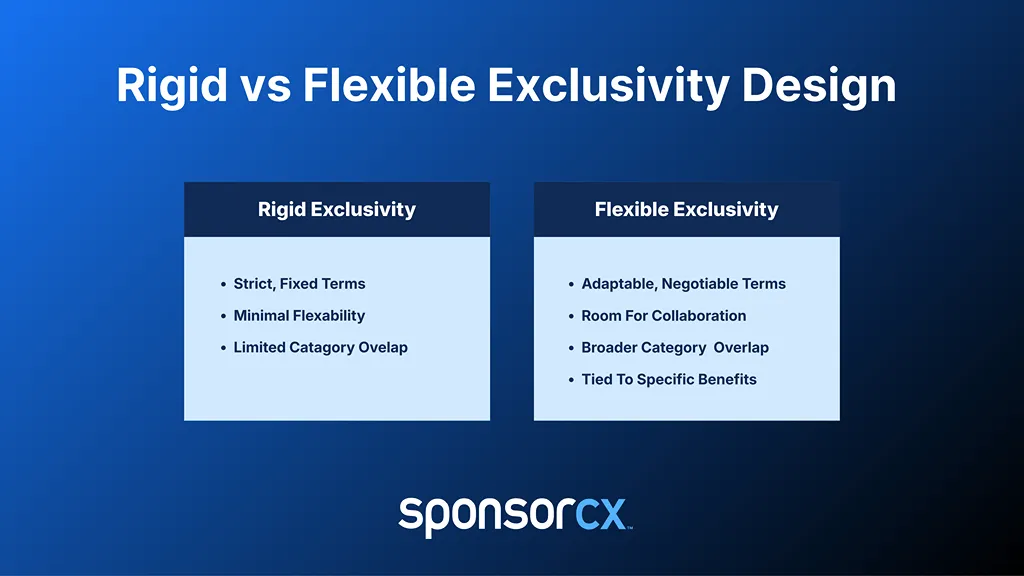
One of the biggest risks in sponsorship tier design is being too generous with your definitions early on. While it’s tempting to promise a brand the world to close a deal, broad category exclusivity sponsorship can eventually prevent you from signing other great partners. To maintain long-term sponsorship success, you have to be precise.
The trick is to offer exclusive sponsorship rights that feel massive to the brand but leave "breathing room" for your property to grow.
Strategies for Flexible Exclusivity
To keep your sponsorship packages agile, consider these three tactics:
- Niche Down: Instead of granting a "Health and Wellness" category, break it into "Official Hospital Partner," "Official Physical Therapy Provider," and "Official Health Insurance." This allows for more exclusive partnerships within the same ecosystem.
- Time-Bound Rights: You don't have to give away the farm for the whole year. Consider exclusivity where a brand owns a specific "Power Hour" or a "Playoff Series."
- Inventory Carve-Outs: Be clear that sponsorship exclusivity in a physical space doesn't automatically mean exclusivity on your podcast or your social media "Throwback Thursday" segments.
Protecting Your Future Revenue
When building out sponsorship tiers and levels, always include a "Right of First Refusal" rather than a permanent block. This ensures that your premium sponsorship tiers stay valuable without locking you into a contract that doesn't evolve with the market.
- Be Specific in Writing: Define exactly what products are covered. If a soda brand is your partner, specify if that includes bottled water or sports drinks.
- Focus on Value over Volume: High sponsorship effectiveness comes from quality interaction. A brand is often happier owning one specific "High-Value Zone" than having a vague, unenforceable claim to an entire industry.
By being surgical with your exclusive partnerships, you protect your sponsor benefits while ensuring you always have room to welcome new brands into the fold.
Final Takeaways
In a world of constant digital noise, sponsorship exclusivity remains one of the most powerful tools in your arsenal. It works best when it’s designed with intention. The strongest examples of exclusive partnership are built around access, timing, ownership, and usefulness.
When exclusivity is clear and purposeful:
- Sponsorship tiers are easier to understand
- Premium levels feel meaningfully different
- Sponsors can easily understand value
- Renewal conversations become simpler
The goal is always the same: provide undeniable value to brands and their audience targets.
If you’re rethinking how exclusivity fits into your sponsorship packages, you don’t have to do it alone. SponsorCX helps you design, manage, and track sponsorships with clarity from the start. You bring the opportunities to make it happen. We make it simple.