Last season a local sports team signed a one-off deal with a regional snack brand. The company got its logo on the scoreboard, in a few social posts, and even on the product’s packaging. But by the end of the season no one could say what the partnership stood for.
It felt like the fans barely noticed. The sponsor saw little discernible return, and when renewal time came around, both sides walked away. If we treat sponsorships like short-term transactions, that’s what happens.
When partners invest in sponsorships built around a shared purpose, audiences feel it. Community support and measurable outcomes result when sponsors and properties work together.
It’s like moving from renting space on a sign to owning a system that generates repeated value. Community-based sponsorships build trust. They make results easier to track, and lay the groundwork for renewal.
Purpose drives the heart of every sustainable sponsorship program.
What Is a Purpose-Driven Sponsorship Program
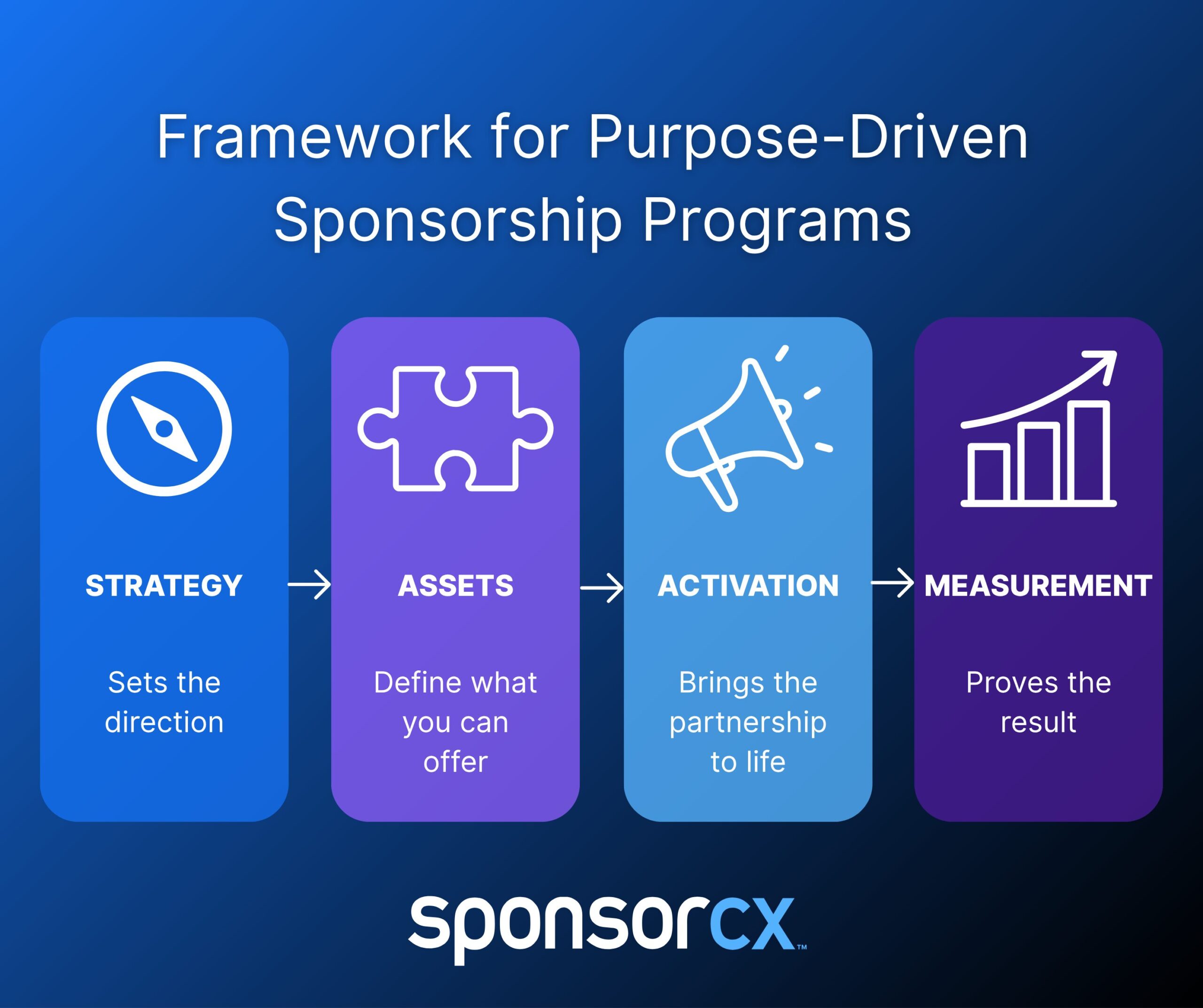
We build purpose-centered partnerships using strategy, assets, activation, and measurement.
- Strategy sets the direction.
- Assets define what you can offer.
- Activation brings the partnership to life.
- Measurement proves the results.
When these pieces work together, you have a sustainable program.
The biggest difference between traditional sponsorships and transformational sponsorship programs is alignment. One-off deals often chase exposure. Sponsorships with purpose coalesce around shared values. When both sides commit to brand values alignment, the program creates lasting meaning.
The National Basketball Association’s partnership with Nike is a case in point. Nike launched the “NBA Care” and “Community Impact” activation programs that tied into youth clinics, educational resources, and social impact campaigns connected to meaningful causes. Both Nike and the NBA benefited because the work resonated with fans and communities.
This is what sets purpose-led marketing strategies apart. It’s not about counting impressions. It’s about creating programs that serve both the business and the community. The metrics for measuring sponsorship value are changing. Done right, these strategies renew, scale, and build strength year after year.
Why Purpose Creates Stronger Sponsorships
Sponsor programs work best when they are planned with a purpose. The old scattershot model where brands buy a logo placements and social posts, rarely deliver lasting results. But purpose connects every activation back to a bigger mission.
Fans care as much about the reason behind what a brand does as they do the product or service itself.
Purpose creates consistency. When a property works with multiple sponsors, it can be tempting to run unrelated campaigns. That often confuses the audience. A purpose-driven program ties every partner back to shared values. It creates a unified story.
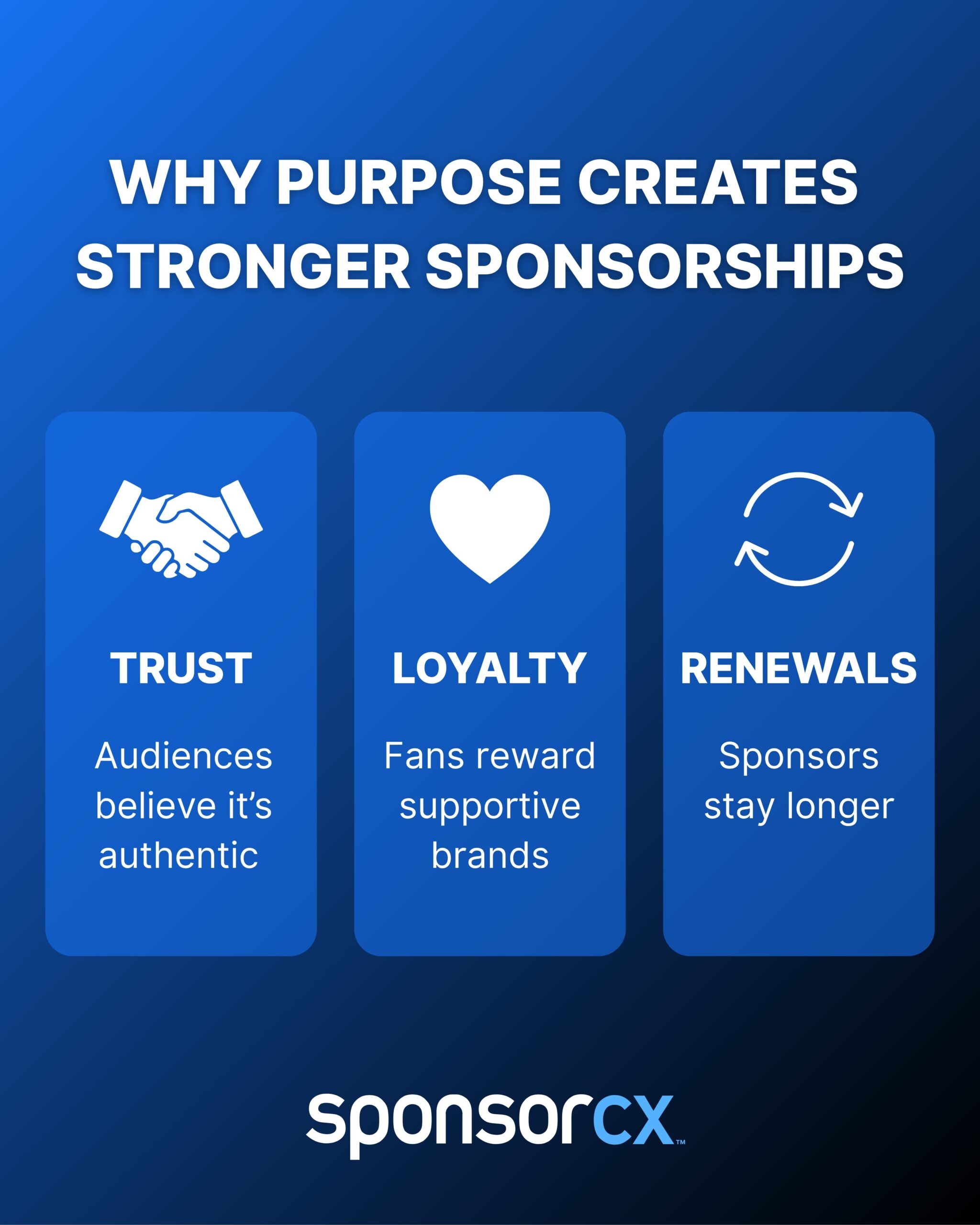
Research shows consumers prefer brands that engage in sponsorship with purpose. They form stronger emotional connections when activations are purpose-centered. The payoff includes:
- Trust – audiences believe the partnership is authentic.
- Loyalty – fans reward brands that support their community.
- Renewals – sponsors stay longer when results go beyond exposure.
Brands gain meaningful brand partnerships that reflect their values. Properties attract motivated partners who stick around. That alignment creates transformational sponsorships that are easier to scale and sustain.
Purpose is not a nice add-on. It’s the glue that holds sponsorship agreements together and makes them more valuable over time. Consistency, trust, and loyalty are the rewards. Those are the qualities that turn a deal into a long-term partnership.
How to Design a Framework for Purpose-Driven Sponsorship Programs
Designing a strong program requires planning, structure, and intentional steps.
Step 1- Audit your current portfolio. Review every sponsorship and identify your assets. These could include signage, digital posts, hospitality, community events, or media exposure. Look for gaps.
An audit also helps you avoid overlap. If two sponsors are getting similar assets, you may be diluting impact. If an important category is missing, that’s a gap worth noting. This step gives you a baseline before you layer in purpose.
Step 2- Define the shared purpose. Look for the causes or missions that both the sponsor and the property care about. Among others, these could include education, sustainability, health, or youth development. When both sides point to a shared goal, the program feels authentic. Purpose is the filter for every decision that follows. Always go back to purpose.
Step 3- Develop integrated activations. Transform sponsorships into stories fans can feel through consistent touchpoints like these:
- Season-long community or cultural campaigns that link every game or event back to the shared cause.
- Digital content series showing real-time impact.
- Volunteer programs that invite employees, fans, and partners to participate.
- Cause-related merchandise or fundraising initiatives.
- Educational or grassroots outreach such as clinics, workshops, or scholarships.
Step 4- Governance and Reporting. Accountability matters. Use dashboards, quarterly reviews, and independent evaluations to track results. Governance prevents overpromising and builds trust.
The “Crucial Catch” partnership between the NFL and the American Cancer Society is a great example. The program began focused on breast cancer awareness and expanded into early detection for multiple cancers.
It’s not a one-off campaign and has been active for more than a decade. The program aligns with community health, connects to brand values, and delivers measurable outcomes.
Putting the Framework Together
To design purpose-driven initiatives, follow this framework:
- Audit your assets
- Define a shared purpose
- Create integrated activations
- Set up governance and reporting
Each step builds on the last, turning one-off deals into sustainable programs. When purpose anchors the center, your program earns loyalty, drives measurable results, and delivers lasting value to the community.
How to Activate and Measure Sponsorship Program
Activations bring transformational sponsorship programs to life. They turn a contract into a story fans can see and feel. Without activation, even the best strategy will languish unused.
The best activations are planned with purpose. Their benefits go beyond media impact.
Best activations include:
- Live events and game-day experiences.
- Digital content and social campaigns.
- Community initiatives and employee involvement.
Beyond Impressions
For too long, success was measured only in impressions. Today’s purpose-driven sponsorships track:
- Engagement – likes, shares, comments, participation.
- Community impact – funds raised, volunteer hours, services delivered.
- Perception shifts – trust, loyalty, favorability scores.
- Renewal rates – partners extending deals.

The Role of Technology
Technology has become the backbone of modern sponsorship programs, making it easier to prove value and stay aligned. Sponsorship management platforms like SponsorCX
- Log activations
- Track KPIs
- Generate real-time dashboards
Social listening tools measure how fans connect the brand with the cause. Tools like YouScan make sponsorship measurement more meaningful. With AI-powered image recognition, they can identify brand logos on merchandise, field signage, or social media photos, even when the brand isn’t tagged.
Pitfalls to Avoid
- Treating measurement as an afterthought
- Overpromising outcomes you can’t prove
- Short-term thinking instead of long-term consistency
When you measure from the start, renewal conversations become easier. Both sides see the results clearly.
Our blog on the Top 10 Sponsorship KPIs for Brands and Properties spells out what should be tracked.
Purpose-Driven Programs Case Studies
Each of the following case studies helps to illustrate what works, what does not, and why some partnerships last for years.
- NFL and American Cancer Society: Crucial Catch
The previously mentioned “Crucial Catch” program is one of the most visible purpose-led marketing strategies in sports. The goal was to raise awareness around early breast cancer detection and expand the conversation to other types of cancer.
Activations included themed game days, player gear, educational content, and fundraising campaigns. Fans could see the effort on the field and also get involved through donations and screenings. The program elevated long-term visibility for cancer awareness and raised millions for prevention and education.
The lesson here is scalability. Crucial Catch started with a narrow focus but grew into a comprehensive program.
- MLS and Adidas: Community Youth Development
Major League Soccer and Adidas partnered on a program to grow the game at the grassroots level. The goal was to provide access to soccer for youth in underserved urban communities. Adidas wanted to connect with young athletes, while MLS aimed to build its fan base and strengthen ties with local neighborhoods.
Activations included free clinics, equipment donations, and community tournaments. Coaches and players from MLS teams often joined events. They created personal connections with kids and families. Adidas supplied gear and funding, making the program both visible and practical.
Results showed stronger participation in youth soccer and increased brand loyalty toward Adidas among young players.
- Glastonbury Festival and Oxfam: Social Impact at Scale
Festivals can also show the power of purposeful sponsorship. The Glastonbury Festival in the United Kingdom has supported humanitarian causes for many year by working with Oxfam. The goal is to use the festival’s massive audience as a platform for global social impact.
Activations include volunteer opportunities where Oxfam supporters staff key positions at the festival. In exchange, Oxfam receives visibility, donations, and access to potential long-term advocates. Campaigns around climate action and poverty awareness are woven into the festival experience.
The results are impressive. Oxfam has raised millions through this partnership and recruited thousands of new volunteers. The lesson here is renewal. When purpose is embedded, both sides benefit from long-lasting collaboration and community trust.
What These Programs Teach Us
These examples show how our sponsorship frameworks can succeed when built on clear goals, integrated activations, and strong measurement. Each program proved its value.
The common thread is brand values alignment. When brands and properties find authentic overlap, they can build purposeful sponsorships. The framework is the same: start with goals, activate in meaningful ways, and measure results that matter.
The Bottom Line
The lesson for anyone building sponsorship programs is simple. Purpose is not an accessory. It is the engine that makes programs renewable, trustworthy, and transformational.
Short-term deals fade, but transformational deals thrive because they align with values, activate across channels, and measure results that matter.
The choice is simple. You can chase one-off transactions, or you can design sponsorships that deliver repeated value and earn community trust.
You want programs that prove value, scale with your goals, and build loyalty. SponsorCX is here as your guide. We have the tools, reporting, and support you need to design and manage community-focused sponsorship that works. The next move is yours—start building programs with purpose. SponsorCX is here to help you make them measurable, sustainable, and ready to renew.