Maya’s boss leaned into her cubicle. “Hey, just a heads-up—the sponsorship audit’s next week. Make sure we’re buttoned up.” Her gut tightened. Somewhere between the halftime fireworks and the VIP reception, her tracking had slipped. Screenshots were buried in emails, photos scattered across text threads, and the contract hadn’t been reviewed since signing day. Maya knew an audit would expose the chaos. It wasn’t about paperwork anymore. It was about accountability.
Whether you manage sponsorships for a brand or oversee partnerships for a property, a sponsorship audit is a valuable exercise. It goes beyond ticking boxes. It verifies performance, ensures compliance, and keeps everyone accountable.
In this guide, you’ll learn what a sponsorship audit covers, when to conduct one, what tools you’ll need, and how to use your findings to improve performance. Think of it as both a playbook and audit preparation checklist. It will help you streamline sponsorship deliverable reporting and track sponsorship deliverables.

What Is a Sponsorship Audit?
A sponsorship audit is a detailed review of how sponsorship agreements are executed against how they were promised. It looks at deliverables, timing, compliance, performance, and proof of value. The audit ensures transparency on both sides so that sponsors know they got what they paid for, and properties demonstrate professionalism and reliability.
Key Components
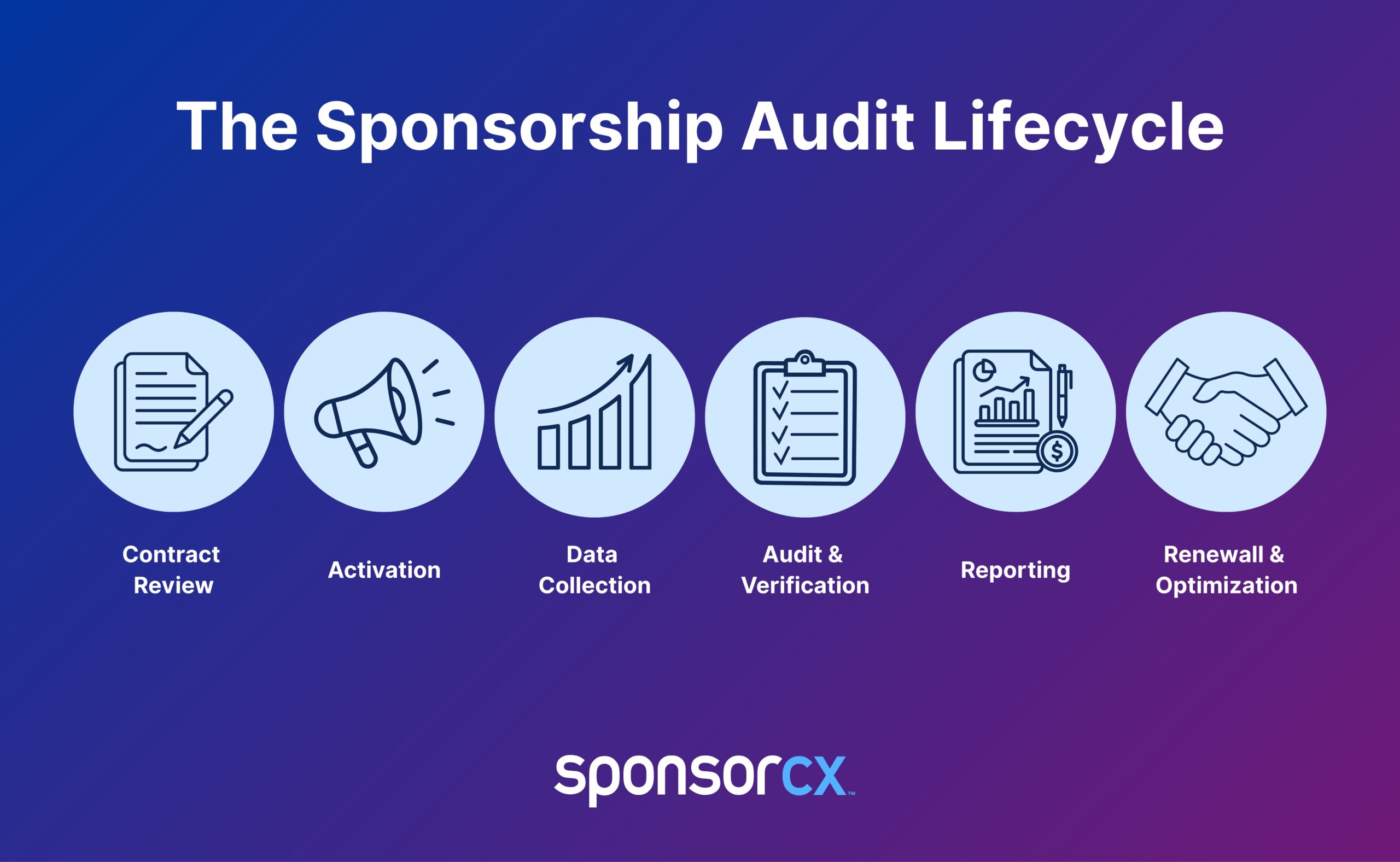
- Contract review: Analyze the fine print including rights, timelines, and obligations.
- Deliverable tracking: Confirm each promised asset was fulfilled (signage, digital exposure, hospitality, etc.).
- Performance reporting for sponsors: Match metrics—reach, impressions, ROI—to agreed goals.
- Compliance review: Check exclusivity clauses and proper logo use.
- Documentation: Save evidence like photos, media reports, and invoices.
- Reconciliation: Verify payment amounts match deliverable values.
Why It Matters
A strong audit builds credibility. Sponsors gain confidence in their investment. Properties gain leverage for renewal discussions. It also provides measurable insights for internal reporting and financial accuracy. Industry research shows marketers still need stronger sponsorship metrics and accountability.
A sponsorship audit is your accountability engine. It validates commitments, protects value, and strengthens partnerships.
Once you understand what an audit is, the next question becomes timing. Knowing when and why to conduct one determines how useful your insights will be.

When and Why to Conduct It
A sponsorship audit is most powerful when it’s timely. Performing one too late can leave gaps you can’t fix; too early, and you miss the complete picture. Strategic timing makes the data actionable.
When to Audit
- Post-activation: After a campaign wraps up, evaluate what was delivered.
- Quarterly or annually: For long-term or multi-phase sponsorships, keep them on track.
- Pre-renewal: Arm yourself with facts before renegotiation.
- Triggered events: Launch of a new sponsorship, leadership change, or major asset shift.
Why to Audit
Audits confirm sponsorship compliance and provide insight into campaign performance. They uncover missed assets, inconsistent reporting, or contract misunderstandings before they grow into renewal-killing issues. A timely audit also strengthens collaboration between finance, legal, and marketing.
The best audits are proactive, not reactive. Build them into your sponsorship lifecycle so accountability becomes habit, not panic.
With timing set, the next step is preparation. Gather the tools, data, and systems that make your audit efficient and credible.
Essential Tools and Data Sources
You can’t run a thorough sponsorship audit using spreadsheets alone. Modern audit tools for sponsorship management consolidate contracts, deliverables, analytics, and proof of performance in one place.
Core Platforms
- Sponsorship management software: Tracks assets, fulfillment, and deliverable status.
- CRM or contract repository: Stores agreements, values, and milestones.
- Analytics dashboards: Capture impressions, reach, and engagement from activations.
- Finance systems: Track payments, in-kind value, and cost reconciliation.
- Documentation library: Hold photos, vendor reports, and proof of delivery.
Data to Collect
- Contracts: Terms, rights, obligations, cost.
- Deliverable inventory: Promised assets vs. what was delivered.
- Performance data: Impressions, audience engagement, conversions.
- Proof of delivery: Photos, screenshots, vendor invoices.
- Compliance data: Proper logo usage, exclusivity adherence.
- Tracking deliverables: Status updates on each item (owner, due date, completed/verified).
Integration Tip
Create a shared dashboard linking each deliverable to its evidence. A single source of truth reduces guesswork and manual tracking. Use audit tools for sponsorship management that link deliverables to evidence with time stamps
Great audits rely on great data. The right tools make sponsorship fulfillment reporting automatic, traceable, and defensible.
With systems ready, it’s time to walk through the actual process. Here’s the audit preparation checklist that turns theory into execution.
Step-by-Step Audit Checklist
- Pre-Audit Preparation
Start by collecting everything that defines your sponsorship: contracts, invoices, activation plans, and performance summaries. Assign a lead auditor and confirm your scope. Is it a campaign, season, or entire portfolio? Build your audit preparation checklist with these items:
- Deliverables promised
- Responsible parties
- Due dates
- Current status (Not Started / Complete / Verified)
- Link to supporting evidence
- Verification Phase
Line by line, compare what was promised to what was delivered. Use sponsor deliverable tracking to confirm execution dates, quality, and exposure metrics. Validate deliverables with tangible proof including photos, signage reports, website screenshots, or attendance lists. Check financials: Was value delivered for every dollar billed? Were make-goods issued where needed? Document all findings in a shared report.
- Performance Review
Convert your audit into value insights. Compare activation metrics with contract expectations. Did the campaign hit its reach goals? How did fan engagement or conversion rates compare to benchmarks? Link every data point to a measurable outcome for transparency. Standardize performance reporting for sponsors so results are comparable season over season
- Reporting and Action
Summarize results in a concise sponsorship fulfillment report:
- Total deliverables promised vs. delivered
- Percentage fulfillment
- Value realized vs. value promised
- Key compliance notes
- Recommended improvements
Share the report with sponsors or executives and record next steps, whether it’s a renewal conversation, a corrective plan, or a process update.
This checklist keeps you consistent. It transforms a vague review into a verified record that demonstrates the value of a corporate sponsorship management system.
Once you’ve mastered the steps, sharpening your approach through best practices ensures every future audit is faster, cleaner, and more insightful.
Best Practices and Advanced Tips
Governance and Ownership
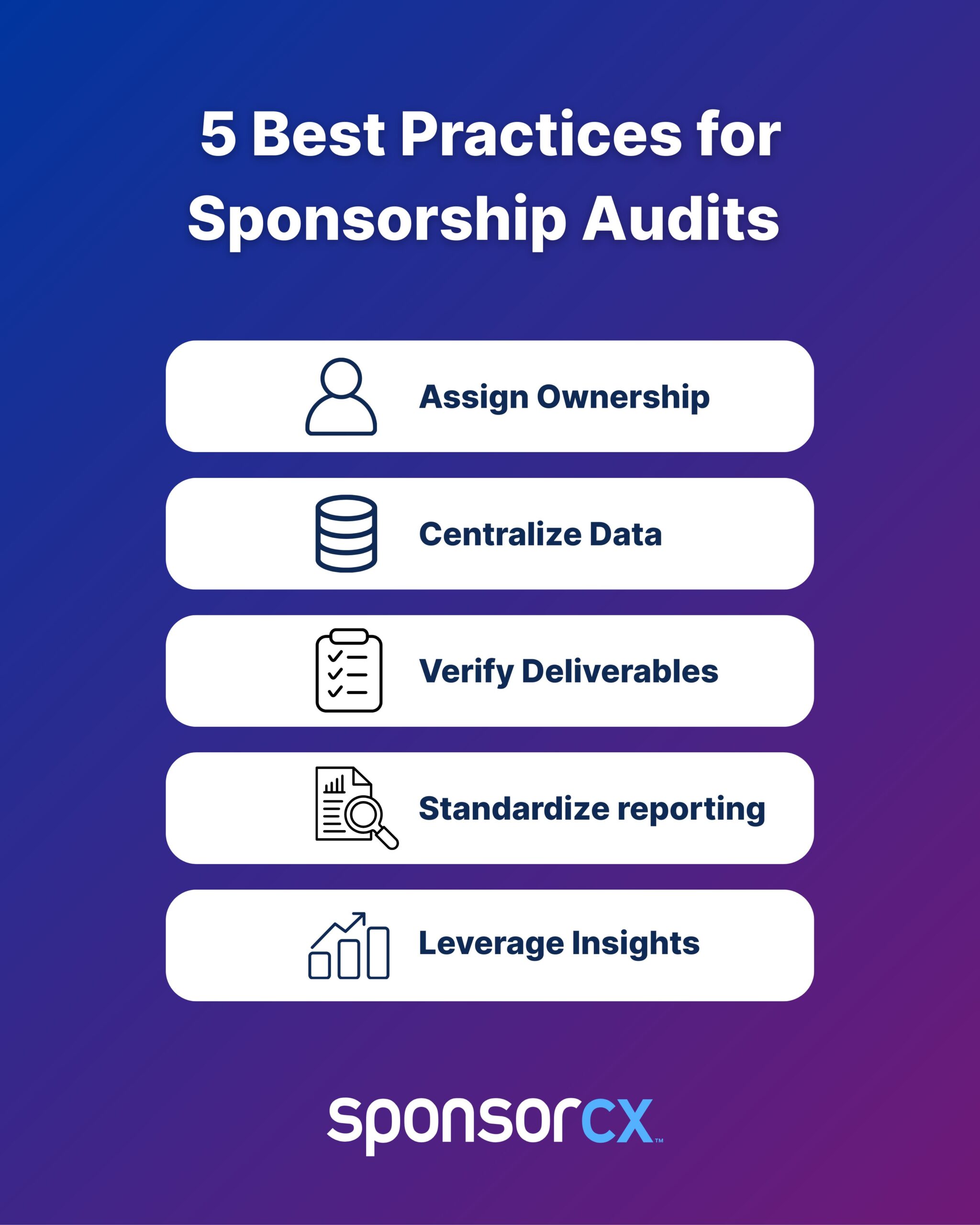
Assign clear audit owners. Every sponsorship needs one accountable person managing data collection and communication. Create standardized templates for reports and checklists so each audit follows the same structure.
Collaboration Between Sponsor and Property
Transparency wins. Share access to dashboards and progress logs early. Agree on performance metrics and evidence types during sponsorship contract review, not after activations begin. Both sides should see fulfillment in real time. No surprises. For disclosure rules on endorsements and sponsored content, review the FTC’s Endorsement Guides. Document your sponsorship contract review outcomes: rights used, make-goods issued, and any updates for renewal.
Continuous Improvement
Treat audits as learning tools, not just compliance checks. Each finding should inform the next deal, whether it’s tightening contract language, improving deliverable tracking, or investing in stronger analytics. Integrate automated reminders for deliverables. Use alerts to prevent missed activations. Over time, your audit data becomes a powerful archive showing performance growth and ROI trends.
Avoiding Common Pitfalls
- Poor documentation: No photo or proof means no credit—capture everything.
- Inconsistent reporting: Align on one format for fulfillment updates.
- Reactive approach: Don’t wait for renewal time; make audits ongoing.
- Over-promising deliverables without tracking: That gap creates audit risk.
- Disconnected contract vs. fulfillment tracking: Keeps you vulnerable.
Best practices future-proof your process. They shift audits from stressful clean-ups to smooth checkpoints that elevate professional credibility.
Once the groundwork is set and best practices are in motion, the only thing left is using your audit results to drive smarter decisions.
Case Study: How Audit Insights Transformed a Sponsorship Portfolio
A global brand (kept anonymous for confidentiality) engaged Lumency, a sponsorship consulting firm, to perform a portfolio audit across multiple countries.
The Situation
- Sponsorship contracts were decentralized with no standardized fulfillment reporting.
- Regional teams used inconsistent tools and tracked sponsor deliverables differently.
- Renewal decisions were being made without visibility into performance or compliance.
The Audit Process
- Lumency built a centralized dashboard capturing all contracts, deliverables, and status across markets.
- Every sponsorship was mapped against promises, deliveries, and documentation.
- Gaps such as missing proof, late assets, and incomplete metrics were flagged and corrected.
- The data enabled a global sponsorship contract review that standardized how performance was measured.
The Outcomes
- Weak fulfillment practices were fixed before renewals, avoiding contractual disputes.
- The brand discovered several underused assets and restructured its inventory for better ROI.
- Centralized deliverable tracking improved collaboration among legal, marketing, and finance.
- Renewal negotiations became data-driven rather than subjective.
Key Takeaways
- Centralized tracking and documentation reduced risk and improved renewal leverage.
- Standardizing deliverable definitions improved compliance and accountability.
- Combining contract review, fulfillment reporting, and performance measurement turned assumptions into verified value.
Real-world audits prove that structured processes, clear documentation, and unified tools can transform sponsorship management from reactive to strategic.
With evidence of success, the next step is applying those insights strategically across your portfolio.
Turning Audit Insights into Strategy
Audits aren’t just about catching mistakes. They’re about discovering patterns and the psychology behind successful sponsorships. Maybe digital activations outperform signage. Maybe hospitality assets go unused. These insights fuel smarter sponsorship design, better pricing, and clearer performance narratives.
Use findings in renewal conversations to prove value or negotiate improvements. Convert compliance data into marketing stories: “We delivered 97% of all contracted assets with a 15% engagement lift.” Facts like that earn trust.
Audit insights can also guide internal strategy. They reveal which teams deliver on time, which vendors underperform, and where process improvements drive efficiency. Over time, your audit data becomes a benchmark for operational excellence.
A completed audit is a strategic weapon. It reveals what works, what doesn’t, and how to grow future sponsorship ROI.
The process comes full circle when you close the audit loop and prepare for the next cycle—embedding accountability into every sponsorship stage.
The Bottom Line
A thorough sponsorship audit transforms how brands and properties manage partnerships. With organized data, strong sponsorship compliance, and verified reporting, you can walk into any renewal meeting with confidence.
Use this guide as your living audit preparation checklist. Pair it with modern audit tools for sponsorship management to automate tracking, simplify documentation, and keep every stakeholder aligned. The payoff is clear: cleaner contracts, faster renewals, and stronger relationships.
You’ve worked too hard to let an audit expose what your spreadsheets can’t track. With SponsorCX, you don’t have to scramble. Our platform provides a single dashboard to manage every deliverable, prove every result, and walk into any audit with confidence.
You’re the hero of your sponsorship story—SponsorCX is the system that helps you win it.
Start your next audit ready, not worried. Schedule a demo with SponsorCX today.