In the good ol’ days, sponsorship was simple. A brand paid for visibility and a property placed a logo and maybe a slogan somewhere in the venue or in its advertising. That’s a deal you can still get, but it’s no longer enough.
You’ve probably seen the changes. Partners want more data. They’re asking for activations that didn’t exist a few years ago. They want measurable results connected to their goals. And renewal talks are a lot tougher.
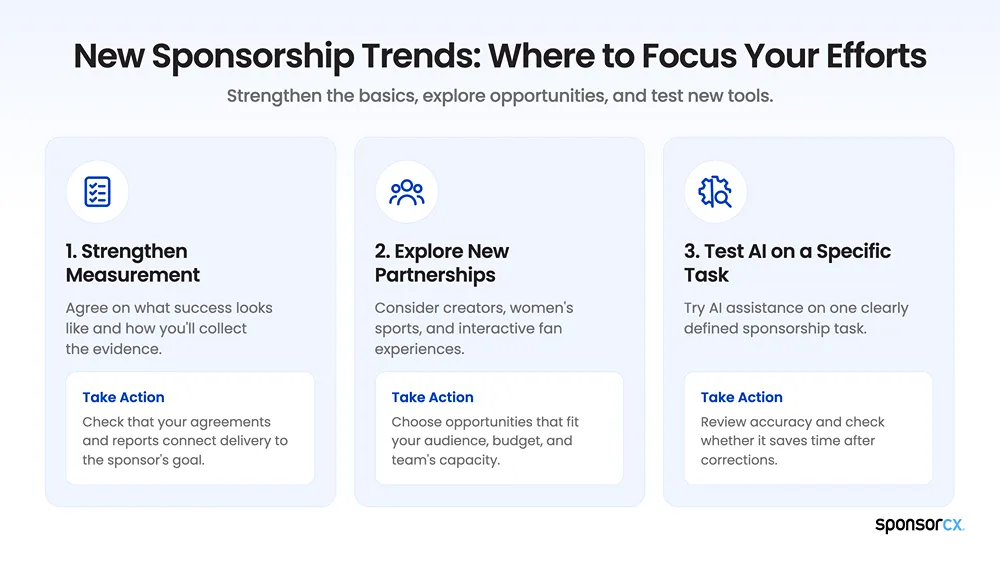
Keeping up with sponsorship trends can feel like a full-time job, but these changes follow patterns. Spotting the cues below will help connect each trend to an owner, an adaptable package, and the proof needed at renewal.
Which Sponsorship Marketing Trends Deserve Attention?
These categories draw on the research that follows and can help you plan. Even a familiar industry practice may be something your team hasn’t tried yet.
Trend 1: Better Proof Comes First
The first trend is toward clearer evidence of value. The 2026 Canadian Sponsorship Landscape Study found that brands are spending more on sponsorship evaluation than at any point in its 20 years of tracking. That points to growing pressure on sponsorships to prove their worth.
Start with three questions:
- Did we deliver the rights?
- Did people respond?
- Did that response support the business goal?
Separate Placement from Proof
A photo of a branded entrance only proves that it happened. It doesn’t prove that visitors remembered the sponsor or made a purchase. A scan shows interest, but it doesn’t tell you whether the visitor became a qualified lead. Make those differences clear in both the proposal and the recap.
Choose one main outcome before choosing the assets. For an awareness campaign, that might be a change in aided brand awareness, measured through a survey. For a business audience, that might mean meetings that accomplish agreed upon criteria. Decide who will collect the evidence and when it will be available
Rebuild the Renewal Report
Rework one renewal report around the original goal. Show what was delivered, how the audience responded, what it cost, and which results you can reliably attribute to the sponsorship. Then use The Sponsorship Renewal Playbook to turn those findings into a renewal conversation.
Trend 2: Build Sponsorship Packages Around the Outcome
When pitching sponsorships to potential partners, lead with the planned outcome. Trade Show Executive’s 2027 outlook draws on a joint study with Lippman Connects and EVOLIO Marketing. In that study, 43% of show organizers said they saw movement away from standard packages to custom opportunities.
Start with a base package, then add options that serve the partner’s goal. Define the audience, activation, deliverables, reporting, and all costs. Build in flexibility without making pricing or fulfillment hard to manage.
Example: A B2B Expert Clinic
For example, a software sponsor at a B2B conference wants qualified conversations. It suggests hosting an expert clinic. The package might include a workshop, a booking page, and an optional follow-up session. Decide together which meetings qualify, who invites attendees, and when results will be shared with the sponsor.
This gives the sales team a specific promise to discuss and the delivery team a plan it can execute. If the requested outcome can’t be measured, revise the promise before signing.
Trend 3: Plan How to Use Audience Data Before Collection
First-party data is becoming a bigger priority for marketers. Experian’s 2026 State of Advertising report calls for systems that connect activation, measurement, and data governance. Include a data plan in your next activation brief: what you need, why, and who handles it.
Map the Data Handoff
Before launch, walk through what happens when someone enters the information. Who manages it? Who gets each piece of information? What are people told, and how will you respect their choices? Ask your privacy lead to check the plan, including follow-up.
Keep the offer simple and clear. Only ask for the details you need.
Try a sample entry before going live. Agree on when records will arrive and who will sort out mistakes. At renewal, count the records that meet your agreed criteria; filling out a form doesn’t automatically make someone a qualified lead.
Trend 4: Creators Become Part of the Sponsorship Plan
In its 2025 creator economy report, IAB projected U.S. creator advertising (sometimes called influencer advertising) spend of $37 billion for 2025, up 26% year over year.
A creator can help people see what a partnership brings to their community. Look at what they share, who follows them, and whether the brand fits naturally into that conversation. Follower count only tells you so much.
At a music festival, for example, a local food creator could put together a guide to nearby restaurants. A sponsor with a natural connection could support the guide and host an on-site tasting, giving fans something useful to explore.
Set Content Rules before Launch
Sort out the basics before anything goes live. Decide who approves, who publishes, and when. Agree on how long the content can run, whether you can pay to promote it, and who adds disclosures. Event footage, performer images, and music each need their own permissions check. Keep approved copies and live links handy for the renewal recap.
Then review the content alongside the response. Did people watch to the end, open the guide, or use the offer? Keep those measures consistent across your reporting, and remember that adding platform audiences together may count the same person more than once.
Trend 5: The Case for Investing in Women’s Sports
Deloitte forecasts at least $3 billion in global women’s elite sports revenue for 2026. That figure includes commercial, broadcast, and matchday revenue.
Choose the opportunity that makes sense for your brand. Who follows the team, league, athlete, or event? What can you do under the available rights? Can the property deliver what you have in mind?
Give the partnership a practical purpose for fans. For instance, a financial services sponsor could help a local club offer a youth clinic and family budgeting sessions. Explain who can join, who will handle the work, and what a good result looks like for each side.
Budget beyond the Rights Fee
The rights fee is only part of the budget. Make sure there’s enough left to create content, staff the activation, promote it, and measure the results. If the numbers don’t work, start with a smaller pilot.
Give the partnership enough time to develop. In the first year, focus on flawless delivery and establishing an audience baseline. Over time, track repeat participation and changes in how people see your brand. Assign someone to lead each milestone and set a date to review it. A single event rarely gives you enough evidence to judge lasting brand progress.
Explore the opportunities in The Sponsorship Playbook Hidden Inside Women’s Sports.
SponsorCX’s partnership management tools can help your team put the plan into practice, with agreements, assets, and fulfillment in one place.
Trend 6: Link Digital Fann Content to Live Events
VML’s 2026 sports and sponsorship outlook points to entertainment, storytelling, and participation as ways to build fandom. Think beyond the people at the venue. Fans might find the event through a clip, follow a favorite personality, or join in online without ever attending.
Look for ways to connect those experiences. A short video could introduce a challenge, a station at the event could let fans try it, and a follow-up could share their results. Give each step a clear purpose and make sure the sponsor adds something fans will enjoy or find useful.
Example: American Express at Wimbledon
American Express’s Wimbledon 2025 program gave fans several ways to join in, from on-site games and tennis ball customization to viewing events outside the grounds. It also included mobile and console competitions through Wimbledon eChamps. The takeaway: make room for fans who can’t be there in person.
Scale It for Smaller Events
You can keep this simple at a community event. Give people a helpful pre-event guide and one well-run activity. Plan for capacity, staffing, accessibility, and what you’ll do if the weather or technology becomes a problem. Then walk someone new through the guide before production. They may spot a confusing page or a queue problem your team has missed.
Follow how people move through the experience, from visiting and starting to finishing and taking the next step. Where do you lose them? Use those gaps to make the next event better. Explore Fan Engagement Tools Every Sports Team Should Know About for help choosing tools that fit.
AI Needs a Defined Job and a Human Reviewer
Stats Perform’s 2026 trends report, based on a survey of 675 sports media executives, found that 81% had expanded their use of AI in the past year to gain efficiency and cut costs.
Try AI on something manageable, like pulling action items from approved meeting notes or sorting existing fulfillment notes. Give it a clear, limited set of information and compare what it produces with the source.
Make it easy to check AI’s work by keeping the source notes attached. Assign someone to review the details and record fixes, especially mistakes that keep coming up. Before using a tool, make sure it’s approved for the information you’re sharing.
Connect the Next Test to the Renewal Decision
A pilot can show whether an activation runs smoothly or a new process saves time. Understanding the partnership’s lasting value takes longer. Match your review timing to the goal. One event may reveal practical problems, while changes in awareness or preference may need repeated exposure and more time to measure.
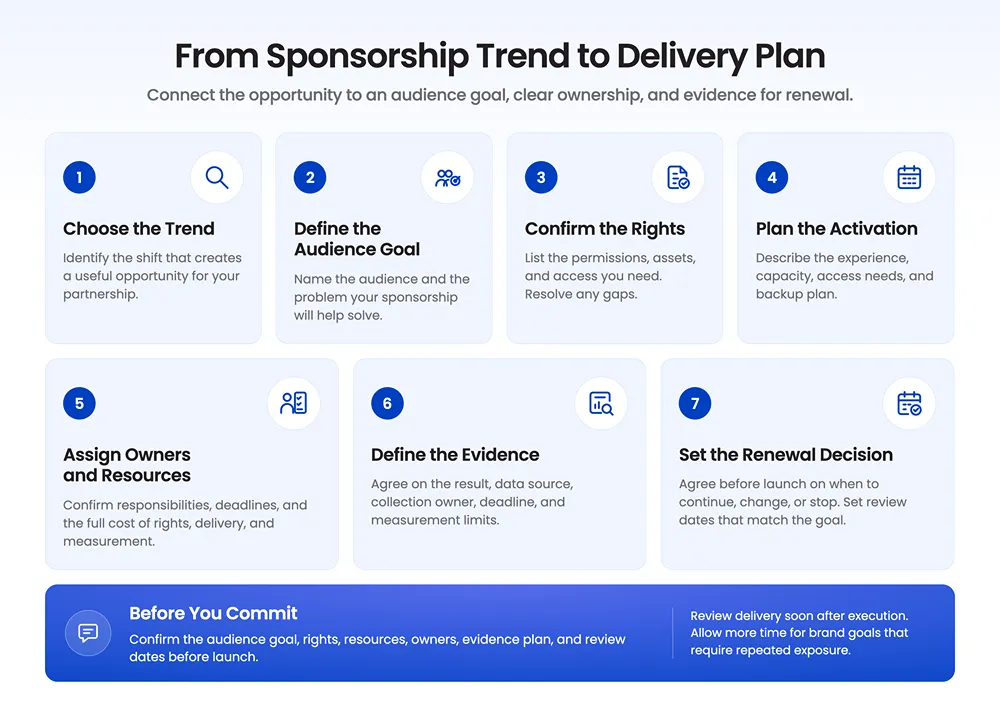
Use a Trend-to-Delivery Worksheet
Ready to try it? Work through this worksheet to plan the next step.
Sponsorship Marketing FAQs
What Is Sponsorship Marketing?
Sponsorship marketing is a partnership in which a brand provides money, products, or services in exchange for agreed rights and benefits. Effective marketing sponsorships connect those benefits to a defined target audience need and a measurable business goal.
Which Sponsorship Marketing Trends Should I Prioritize?
Start with the opportunity that best fits your audience, goals, and delivery capacity. Creator partnerships, women’s sports, and participatory fan experiences each deserve consideration, but none is the right choice for every sponsor.
How Do You Build a Sponsorship Marketing Strategy around a New Trend?
Turn the trend into a delivery plan. Define the audience goal, confirm the required rights, plan the activation, and assign owners and resources. Then agree on what evidence you will collect and when you will review it. Set conditions for continuing, changing, or stopping before launch.
How Should You Measure Sponsorship Success beyond Impressions?
Choose measures that match the sponsor’s objective. Depending on the partnership, these might include qualified meetings, product trials, participation, or changes in brand awareness. Track delivery and costs alongside results.
How Can Smaller Sponsors Act on Event Sponsorship Trends?
Test one manageable activation with a clear owner and an agreed success measure. A focused workshop, creator collaboration, or fan activity can help you learn without committing to a large program. Include staffing, production, follow-up, and measurement in the budget.
How Can Sports Business Insights Inform Sponsorship Decisions?
Use sports business insights to identify audience shifts and opportunities worth investigating. Then examine the specific property, audience, rights package, and delivery costs. Growth across a sport or league does not establish the value of an individual partnership; your decision still needs evidence that matches your goals.
Turn Sponsorship Marketing Trends into a Repeatable Plan
Partners want more proof, more creativity, and more accountability. Meeting those demands with spreadsheets and scattered email threads is a losing game. You need a system built for the way sponsorship works now. SponsorCX will:
- Centralize agreements, assets, and partner information so people can find the current record.
- Automate recurring tasks and reminders where your workflow supports them.
- Track fulfillment and collect evidence throughout the partnership.
- Report progress against the goals you agreed on, with clear context for the results.
Bring one upcoming partnership to a SponsorCX demo and explore how that process could work for your team.
You make sponsorships happen. SponsorCX makes it simple.