You’re at a summer music festival. The sun’s dipping low, the crowd’s buzzing, and between sets you wander into a shaded lounge hosted by a beverage brand. Inside, there’s cool air, free samples, a photo wall, and a digital screen where you can design your own drink label. You create one, snap a selfie, and post it. The brand name is right there in your memory, not because it was printed on a banner, but because it was part of your experience.
That’s the power of event sponsorship marketing in the experience economy. It’s no longer about logos and signage; it’s about how brands make people feel. Audiences today crave connection, participation, and stories they can share.
This article breaks down how the experience economy is reshaping sponsorships—from design and activation to measurement and long-term impact. You’ll learn what makes experiential event sponsorships work, how to plan them, and why the most memorable sponsorship experiences are the ones that create emotional value, not just visibility.
Before we dive into tactics, it helps to understand the big idea and why it’s changing how brands think about sponsorships.

What is the “Experience Economy” for Events and Why it Matters for Sponsorships
Imagine walking into a local food festival. Instead of vendors handing out samples, one brand invites you to join a “build-your-own poke bowl” station. You mix, taste, and talk to chefs about ingredients. That’s the experience economy in motion. It turns a transaction into a memory.
What It Means
The term experience economy comes from business authors B. Joseph Pine II and James Gilmore. They argued that after goods and services, experiences are the next stage of economic value. In simple terms, people don’t just want to buy things. They want to live moments that matter. Experiential marketing is opening new opportunities for sponsorships.
Why It Matters for Sponsorships
Events are the perfect playground for experiences. When people connect emotionally, they remember the brands that help create that feeling. Studies show most consumers prefer spending money on experiences rather than possessions. For sponsors, that means a live event isn’t just a chance to be seen, it’s a chance to be remembered.
How It Works
Event marketers can turn sponsorships into shared stories. Pop-up lounges, interactive photo walls, or small digital games tied to a brand message are all relevant examples. When people participate instead of just observe, the sponsor becomes part of their story.
Knowing what the experience economy is only matters if you know how to apply it. So how does it actually reshape event sponsorship marketing in practice? Let’s look at how the goals have shifted.
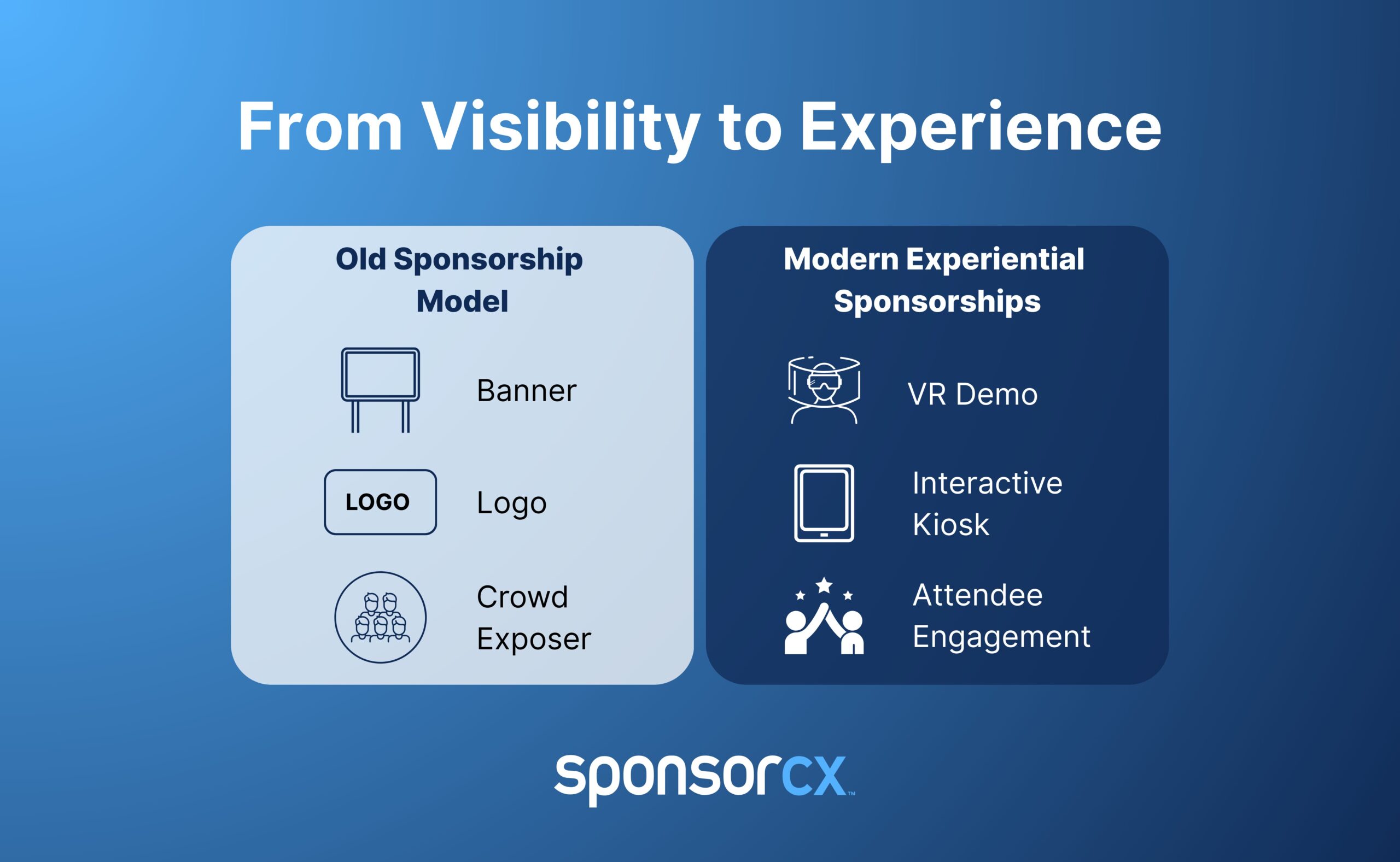
From Logos to Lasting Impressions
At a marathon expo, a sports-apparel company sets up treadmills where visitors can test shoes while their stride appears on a screen. Coaches give real-time tips. Participants walk away with new knowledge and a free clip of their run. Compare that to a static banner. It’s no contest and here’s why:
- Visibility vs. immersion.
A logo might get seen, but it doesn’t get remembered. A beverage company offering tasting experiences or a tech brand running a demo zone engages curiosity and emotion.
- Exposure vs. engagement.
Traditional metrics like “impressions” are giving way to new ones such as dwell time, how long people stay, and participation rate. The shift is from counting views to creating value.
- Transactions vs. relationships
Modern event marketing partnerships rely on collaboration. Sponsors and organizers design activations together so the result feels authentic. It’s not about one-day exposure; it’s about creating emotional equity that lasts.
If sponsorship is no longer about just being seen, what’s in it for the people behind event marketing partnerships? Before diving into the building blocks of great experiences, it’s worth pausing to look at the real benefits experiential marketing brings to both brands and events.
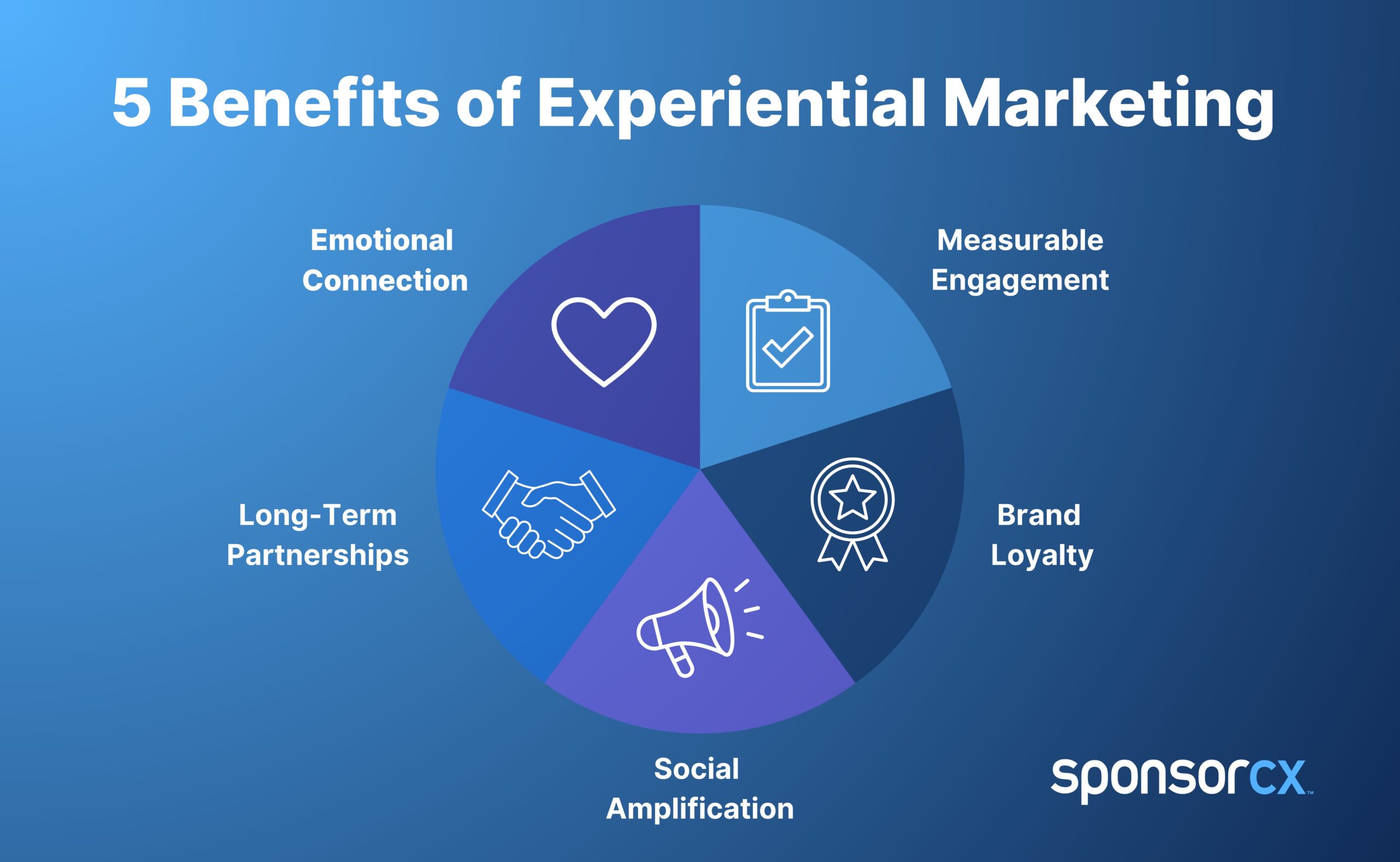
The Benefits of Experiential Marketing for Sponsors and Events
What was the last event you attended that really stuck with you? Maybe it was a pop-up art show where you could paint your own mini mural, or a sporting event where a brand handed out custom gear tied to your favorite team. You didn’t just see the brand, you felt it. That’s the foundation of experiential marketing. It delivers benefits traditional sponsorships can’t match.
Many top brands are already turning simple activations into emotional, sharable moments.
- Deeper emotional connection.
Experiential marketing moves beyond product awareness to emotional engagement. When people participate, they form personal associations that last far longer than exposure to a logo or ad.
- Measurable engagement.
Through digital tools like QR codes, mobile apps, and event analytics, brands can track dwell time, interactions, and feedback. This turns sponsorship activation ideas into data-driven results.
Recent industry data confirms how strong the numbers are. - Stronger brand loyalty.
When a brand contributes to a meaningful or enjoyable experience, attendees often reward it with trust and repeat business. It’s not forced loyalty; it’s earned through value and authenticity.
- Social amplification.
People love sharing experiences. A creative activation can spark thousands of organic posts and photos, turning attendees into unpaid brand ambassadors. That’s built-in reach you can’t buy.
- Long-term partnerships.
Event organizers benefit too. When sponsors see measurable success, they renew. Experiential activations create relationships built on shared outcomes, not just transactions.
In short, experiential marketing creates a win-win: sponsors gain real connection and data, while events gain returning partners and happier audiences.
Elements That Make Sponsorships Memorable
Imagine a community fun-run where a local fitness brand sets up a “Recovery Garden” with foam-rolling stations, hydration tables, and a selfie booth that plants a tree for every post. People stop, smile, and talk about it for weeks. That’s how small ideas create big impact. That’s what makes for an engaging sponsorship activation.
- Focus on the attendee.
Attendees crave connection. The most engaging sponsor activations tap into emotion—joy, curiosity, belonging. Use all the senses: visuals, music, scent, and touch. Let people participate, not just watch. Make it quintessential.
Tap into attendee psychology. - Focus on the sponsor.
Sponsors want measurable value. Align every activation with their story. Gather useful data including email opt-ins, social tags, quick polls. Then, turn them into insights. Follow up with recap videos that highlight both engagement and emotion.
- Focus on shared success.
When sponsor messages blend naturally with the event theme, the result feels genuine. Include photo-ready setups for social media and design follow-ups that keep the conversation going long after the event. That’s how brand experience at events turns into loyalty.
Once you know what makes an experience work, it’s time to put what’s you learned into action.
How to Create an Experiential Event Sponsorship
At a university esports tournament, one tech sponsor invites players to customize gaming chairs with their online handles, then ships them post-event. Engagement goes through the roof, and the sponsor’s name stays in every dorm room. That’s intentional design.
Here’s a practical, step-by-step look at how to plan and deliver experiential events that that have the power to engage.
Step 1: Define clear goals.
Start with a shared discussion. What do both sides want– awareness, leads, community, or sales? Who’s the target audience, and what feeling should they leave with?
Step 2: Align concept and brand story.
Every activation needs a purpose. A travel brand might highlight exploration through an interactive map wall, while a wellness sponsor might focus on calm and mindfulness.
Step 3: Map the attendee journey.
Follow the participant’s path from promotion, arrival, participation, and to post-event engagement. Build sponsor touchpoints that fit naturally into that flow.
Step 4: Execute with care.
Train staff to engage, not sell. Use simple tools like QR codes, mobile scavenger hunts, or AR filters to enhance participation. Prioritize sustainability by avoiding single-use swag.
Step 5: Keep it going afterward.
Post-event, share highlight reels, thank-you messages, and data dashboards that prove ROI. The best live event sponsorship strategy treats the wrap-up as the start of the next campaign.
Designing a great activation is only half the job. You still need to prove it worked and use that proof to build stronger, longer partnerships. Here’s how to measure and sustain success.
Measure Success and Build Long-Term Partnerships
Consider a charity run where the main sponsor uses an app to log every participant’s miles and donates a dollar per mile. The data, the cause, and the emotion all align, and the sponsor has measurable impact that lasts beyond race day.
- What to measure.
Look beyond how many people saw your logo. Track how many interacted. Measure dwell time, engagement rates, and brand recall through surveys or post-event polls.
- Common challenges.
A poor sponsor-event fit can feel forced. Measuring emotional response is tricky, and budgets can be tight.
- How to overcome them.
Align early. When both parties set shared goals and key performance indicators before signing the deal, success becomes measurable. Use engagement apps or RFID badges to capture data, then review results together.
- Long-term strategy.
Treat sponsorship as partnership. Develop multi-year plans with an “experience roadmap” that evolves as you learn what resonates. When brands see consistent ROI and audience connection, renewal becomes an easy decision.
As technology and audience expectations evolve, so does the playbook. Let’s look ahead to what the next generation of sponsorship experiences might look like.
What Is the Future of Experiential Marketing?
At a tech convention, guests wear AR glasses that let them visualize a sponsor’s sustainable energy projects in 3-D. They don’t just hear the pitch, they see it. This kind of immersion is where sponsorship is heading.
Expect to see:
- Hybrid experiences blending live and digital events.
When Nike launched its
Nike Run Club Live series, runners joined local in-person 5Ks while thousands more participated virtually through the app. Everyone shared results and photos in real time, creating one event that lived both on the ground and online. - Personalization driven by data and AI.
Spotify’s sponsorship of live music festivals now uses listener data to send attendees custom stage recommendations and artist meet-and-greet invites based on their playlists. The result feels like the event was built just for them.
- Sustainability as a central design principle.
At the
Formula E electric racing series, sponsors focus on zero-waste hospitality, solar-powered fan zones, and recycled materials in event builds. The effort turns the sustainability message into part of the live experience itself. - Purpose-driven partnerships linking brands and social causes.
During the
Austin City Limits Festival, water brand Liquid IV sponsored hydration stations and pledged donations to local food banks for every refill. Attendees stayed hydrated while supporting a community cause. Purpose alignment is powerful. - Technology-enhanced storytelling that lets attendees co-create content.
Coca-Cola’s
Share a Coke Studio allowed concertgoers to record short music videos with AI-generated soundtracks that featured their names on virtual Coke bottles. Every clip became branded user-made content shared instantly across social media
The future of event sponsorship marketing is about connection, not coverage. Brands that create genuine engagement will define the next decade of experiential marketing.
The Bottom Line
The experience economy has rewritten the rules of sponsorship. Visibility still matters, but it’s not enough. When brands design experiences that move people with moments they’ll talk about long after the event, they create true value.
For event planners, marketers, and sponsors, the task is clear: build sponsorship activations that connect, not just advertise. Start with purpose, invite participation, and measure what people feel, not just what they see. That’s how experiential event sponsorships turn one-time encounters into lasting relationships.
Designing experiential sponsorships shouldn’t feel like guesswork. You want to create events that engage fans, deliver measurable ROI, and keep sponsors coming back. But managing all the moving parts can be overwhelming. Sponsor management platforms eliminate the headaches.
That’s where SponsorCX comes in. Our all-in-one sponsorship management platform gives you the tools to track assets, streamline activations, and measure every outcome so you can focus on what really matters: creating unforgettable experiences.
Stop juggling spreadsheets. Start building sponsorships that last.
Schedule a demo with SponsorCX today and see how easy it can be to manage, activate, and grow your event sponsorship marketing program.