Sarah spent three months organizing a regional triathlon. She booked the venue, mapped the routes, and lined up the volunteers. Then it was time to fund it.
She sent the same two-page sponsorship proposal to 40 local businesses. It explained how much the event meant to the community, how hard her team had worked, and how much money they needed to raise.
Thirty-eight didn’t reply. Two said no.
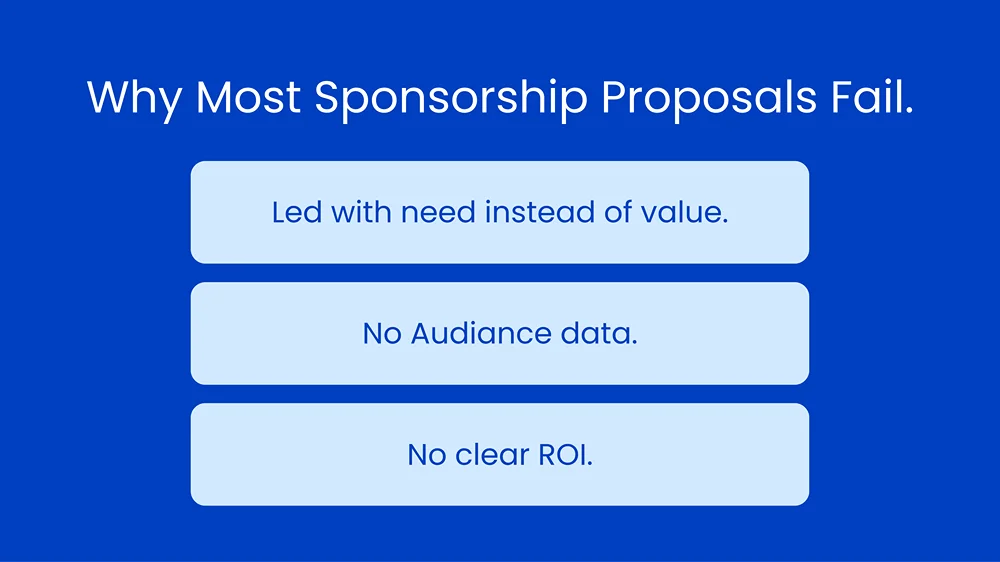
The problem wasn’t the event. The problem was the proposal. It led with need instead of value, offered no audience data, and gave sponsors no reason to care beyond goodwill.
Sponsors respond to one thing: a clear, specific answer to “how do we benefit?” Get that right and the same 40 businesses become a very different conversation.
Brands that sponsor sports events look for audience access, brand visibility, community goodwill, and measurable return on their marketing spend. Your job is to show them why saying yes to your proposal is a smart business decision.
Whether you’re organizing a regional soccer league, a charity 5K, a collegiate esports tournament, or a triathlon, this guide covers everything you need: the structure sponsors expect, the packages that close deals, the data points that make finance teams approve budgets, and the specific mistakes that get proposals deleted before lunch.
What Sponsors Are Looking For
Before you write a single word, you must understand your prospect’s mindset. That person — usually a marketing manager, brand partnerships lead, or CMO — is not moved by your passion for the event. They will not be swayed by how hard your team has worked or how meaningful the cause is. They are asking one question: what’s in it for us?
The brands most likely to sponsor sports events are those in industries with strong lifestyle affinities such as:
- Sportswear and athletic equipment companies
- Energy drink and beverage brands
- Financial services firms
- Automotive manufacturers and dealerships
- Health and wellness companies
- Insurance providers
- Local businesses looking to build meaningful community presence
Each of these segments has different priorities and decision-making criteria.
Sponsors don’t buy events. They buy audiences. Your job is to prove your audience is worth the price.
What Should a Sponsorship Proposal Include?
A well-structured sports event sponsorship proposal typically runs between eight and twelve pages. That is long enough to answer every important question a sponsor might have, but disciplined enough to respect the reader’s time. Proposals that ramble or bury key information in walls of text lose readers fast. Here are the ten essential sections every winning proposal should contain.
1. Executive Summary
Open with a concise, compelling overview no longer than half a page. State clearly what the event is, when and where it takes place, who the audience is, and what you are asking the sponsor to invest. Think of this section as your headline: if it doesn’t hook the reader immediately, nothing else gets read.
2. Event Overview
Provide a fuller picture of the event: its history, format, competitive structure, scale, expected duration, and what makes it genuinely distinctive in the market. If the event has run before, include past attendance figures, media coverage highlights, and the names of any notable previous sponsors.
3. Audience Profile
A thorough, credible audience profile includes:
- Age range and gender breakdown of your attendees
- Geographic distribution — local, regional, or national audience reach
- Household income levels and relevant consumer spending behaviors
- Key lifestyle interests, brand affinities, and purchase behaviors
- Preferred social media platforms and typical engagement rates
- Estimated split between live attendance and digital or streaming audience
The more specific and data-backed this section is, the more persuasive your entire proposal becomes.
4. Sponsorship Packages and Tiers
Your proposal should include clearly defined packages with named tiers, stated investment levels, and a specific itemized list of deliverables for each level. We cover package design in detail in the next section.
5. Sponsorship Benefits and ROI
Translate packages into outcomes. Don’t just list what sponsors receive. Quantify value wherever you can support it with real numbers. If you have hard data from previous events, use it prominently and specifically.
6. Marketing and Promotion Plan
Outline exactly how you will market the event and how prominently sponsors will be promoted throughout. Include:
- Your content calendar
- Paid advertising channels
- Approximate spend
- PR and media relations strategy
- Influencer or athlete partnership plans
- Organic social media content strategy
7. Digital and Social Media Assets
In the current sponsorship landscape, a detailed digital asset inventory is not optional. Detail available digital real estate at each tier:
- Dedicated social posts
- Branded content series
- Email newsletter inclusions
- Livestream sponsor mentions
- TikTok and Instagram Reels activations
- Post-event recap videos
8. About the Organizing Team
Sponsors invest in people as much as events. Include concise professional bios of key organizing team members, highlighting relevant experience in event management or sports marketing. Name any notable affiliations, past events delivered, or previous brand partnerships managed.
9. Testimonials and Case Studies
If you have delivered this event in previous years, let your results and past sponsors tell the story. A specific quote from a previous Title Sponsor describing measurable business outcomes — increased foot traffic, product trial numbers, social media follower growth, direct sales leads — carries far more persuasive weight than forward-looking promises. Include hard numbers wherever you have them.
10. Call to Action and Next Steps
Close with clear, direct, actionable instructions. Specify the deadline by which sponsorship decisions need to be made. Provide direct contact information including both phone and email. State explicitly what the sponsor should do next — whether that is a discovery call, a formal presentation, or signing an agreement. Never leave the next step ambiguous.
How to Build Sponsorship Packages That Close Deals
The tiered sponsorship model is the industry standard. It creates clear options for sponsors with different budgets and goals, and allows them to choose the level of investment that fits their strategy. Here is a framework that works effectively for sports events at any scale.
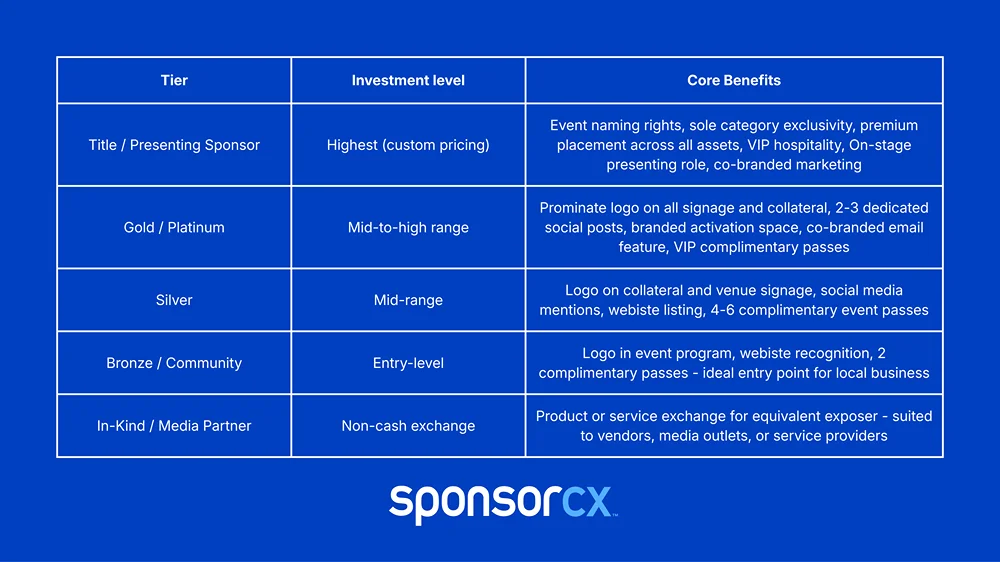
- Limit your Title Sponsor to a single brand. Once you offer naming rights to multiple brands, you dilute the exclusivity that makes the top tier valuable.
- Offer category exclusivity across tiers wherever feasible. A beverage sponsor with exclusive category rights perceives significantly greater value in their partnership.
- Build custom packages for high-value prospects. Some sponsors won’t fit a standard tier. Have the conversation, understand their goals, and build something tailored. That’s how the largest deals are won.
- Itemize every deliverable with precision. “Prominent logo placement” is vague. “Logo on main stage backdrop (12ft × 8ft), facing an estimated 2,400 attendees” is not. Specificity builds trust and reduces negotiation friction.
- Include activation opportunities in premium tiers. A branded sampling station, an interactive experience zone, or a sponsor-hosted competition transforms a brand from a passive logo into an active participant. Sponsors with on-site activation renew at dramatically higher rates than those without it.
How to Find and Approach the Right Sponsors
Sending a generic proposal to an unvetted list of companies is the single most preventable reason that sponsorship efforts fail. The quality of your targeting and outreach is as important as the quality of the proposal itself.
Research Sponsor Fit Before Reaching Out
Look for brands already sponsoring similar events, whose audience matches yours, and who actively invest in partnerships. Check who supports comparable events in your region or sport. Review brand press releases and LinkedIn — a company hiring a sponsorship manager is a company actively spending. For consumer brands, annual reports signal where marketing budget is heading.
Find the Right Contact Person
Use LinkedIn and company websites to find the person responsible for sponsorships or brand partnerships. At smaller companies, that’s usually the CMO. Getting your proposal in front of the right decision-maker matters more than almost anything else in the process.
Warm Up the Relationship Before Sending
Engage with the brand on social media, show up where their team does, and tap mutual contacts for introductions. Any prior interaction dramatically improves the odds your proposal gets read rather than skimmed.
Write a Tight, Purposeful Outreach Email
Keep your outreach to three paragraphs: who you are, why this brand fits your audience, and a simple ask — usually a 20-minute call. Send the full proposal only after they’ve shown interest.
What Mistakes Cause Sponsorship Proposals to Get Rejected?
Understanding why proposals fail is as valuable as knowing what makes them succeed. These are the most common errors. Each one is avoidable.
· Leading with Your Needs Instead of Theirs
Language like “we need funding to cover our venue costs” signals to brand managers that you view them as a rescue rather than a business partner. Reframe every element of your proposal through the lens of what the sponsor receives and what marketing objectives their investment will help them achieve.
· Vague or Unmeasurable ROI
If your document cannot credibly answer “what will our $15,000 investment deliver?” it will not get approved. Quantify every benefit you can support with real numbers. Project impressions conservatively and show your methodology. Calculate media equivalency value for your PR plan. Show historical social analytics to support your reach estimates.
· Generic, One-Size-Fits-All Proposals
Sending an identical document to a youth sports apparel brand and a regional financial services company is a strategic error. The language, the audience alignment story, the benefits emphasized — all of it should be tailored to the specific brand’s customer profile, competitive context, and marketing priorities.
· Poor Visual Design and Formatting
A document with inconsistent typography, low-quality images, and amateur layout signals that the same inattention to quality will show up in the event itself. Your proposal should look like a premium marketing document: clean layout, consistent fonts, and structured white space.
· No Follow-Up Strategy
Sending a proposal and passively waiting reliably fails. Plan your follow-up before you send: one warm, personalized check-in five to seven business days after the initial send, and a second touch two to three weeks after that. Respectful, professional persistence is not aggressive — many long-term partnerships are closed on the third or fourth contact.
· Undervaluing Digital and Social Media Assets
Brands targeting under-40 audiences expect digital. If your proposal doesn’t cover Instagram Reels, TikTok, YouTube, podcasts, and post-event content — with real metrics — you’re leaving significant value on the table.
Sports-Specific ROI Metrics That Differentiate Your Proposal
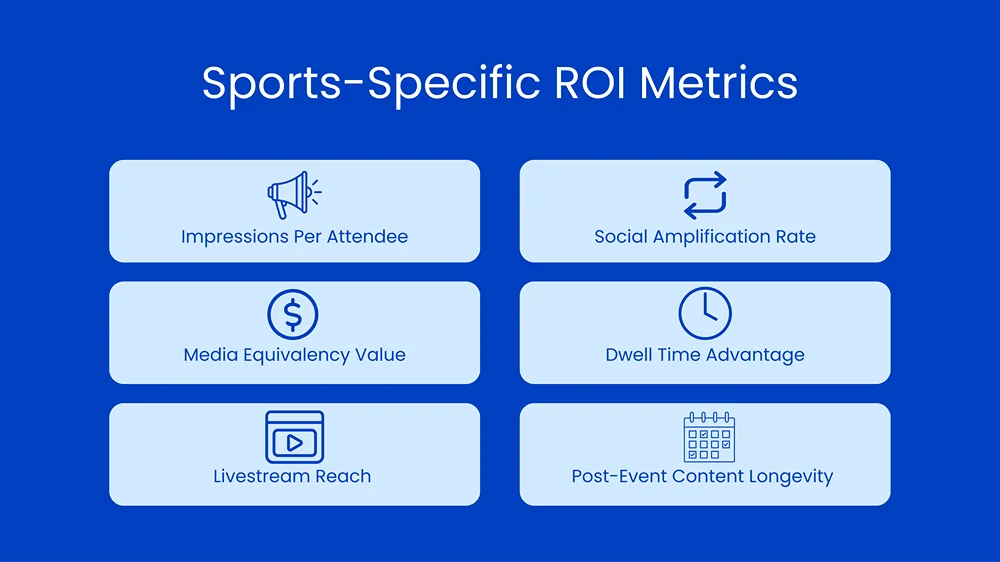
Most proposals rely on the same generic metrics: logo impressions, social follower count, and email database size. Sports events have access to richer, more compelling data that distinguishes your proposal from the competition.
- Impressions per attendee: Calculate the total estimated brand touchpoints each attendee experiences. Include venue signage, event program, PA announcements, digital screens, branded staff apparel, and social media content. The cumulative figure is almost always larger than sponsors expect.
- Social amplification rate: Track what percentage of your attendees actively post about the event on their social accounts. At well-organized sporting events with strong community identity, this rate commonly runs between 15 and 35 percent of total attendees.
- Media equivalency value (MEV): Assign a concrete dollar figure to any television, radio, print, or digital news coverage your event receives, based on the published rate for equivalent paid advertising space or airtime. Even modest local media coverage can represent tens of thousands of dollars in equivalency value.
- Dwell time advantage: Fans arrive early and stay engaged throughout, with total dwell times of four to eight hours common for full-day events. This sustained exposure amplifies sponsorship visibility in a way that no 30-second advertisement can replicate.
- Livestream and broadcast reach: For events streamed online or broadcast on regional television, include historical or projected concurrent viewer counts, total stream hours watched, and geographic distribution of your online audience. Digital audiences can equal or exceed physical attendance for popular events.
- Post-event content longevity: Highlight reels, winner interviews, and athlete profiles continue accumulating views for weeks or months after the event. Sponsors whose brand appears in this evergreen content receive value well beyond event day.
A Real-World Example: Why Specificity Wins
Consider the difference between two approaches to pitching a regional half-marathon to a sports nutrition brand.
The first proposal sends a standard “Gold” package: logo placement on race bibs, finish line signage, and two social media mentions. The price is $8,000. The proposal is professionally formatted but entirely generic. It could have been written for any running event in the country.
The second approach does something different. Before beginning, the organizer researches the brand and discovers they recently launched a new electrolyte product targeting recreational endurance athletes. The proposal is rebuilt around this insight.
The package is renamed the “Endurance Performance Partner” tier. It leads with demographic data showing 62 percent of registered runners are aged 28 to 44 with household incomes above $80,000. That’s a strong match for premium nutrition product buyers.
It proposes a branded hydration station at the 10-mile mark, a product sampling opportunity in the finish line village, a co-branded post-race nutrition email sent to all 4,000 registered participants, and three training-focused social posts featuring brand products in the six weeks before race day. The ask is the same $8,000.
The second proposal gets the meeting. It demonstrates that the organizer understands the sponsor’s business goals and has designed a partnership that solves a real marketing problem. That is the difference between a proposal that sits in an inbox and one that generates a phone call the same afternoon.
Your Pre-Send Checklist
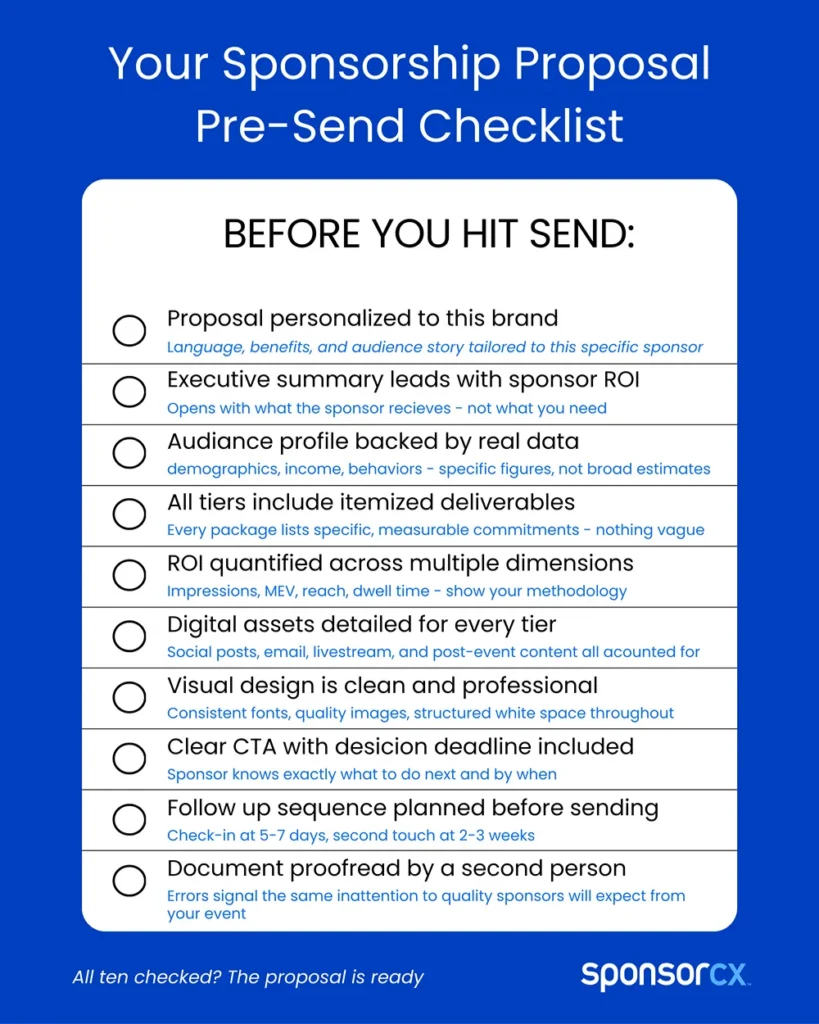
Before sending your proposal to any potential sponsor, confirm that every item below has been addressed:
- The proposal is fully personalized to this specific brand and their known marketing priorities
- The executive summary leads with sponsor benefits and ROI, not with your funding requirements
- The audience profile is supported by real, specific data rather than broad estimates or assumptions
- All sponsorship tiers include itemized, specific, and wherever possible quantified deliverables
- ROI has been quantified across as many dimensions as the data supports
- Digital and social media assets are comprehensively detailed for every tier
- The visual design is clean, professional, and consistent throughout
- A clear, specific call to action with a stated decision deadline is included
- A follow-up communication sequence has been planned before the proposal is sent
- The document has been carefully proofread and reviewed by at least one other person
Final Thoughts: Think Partnership, Not Transaction
The sponsorship proposals that win belong to the people who most clearly understand their sponsors' business goals — and most convincingly show how the partnership advances them. Build yours with specificity, real data, professional design, and a relentless focus on sponsor value. Answer the four questions every brand manager must answer before leadership says yes:
- Will this reach the right audience?
- Can we measure what we get back?
- Will our brand be represented with quality and consistency?
- Is this team capable of delivering what they’re promising?
When your proposal answers all of those questions with confidence and evidence, you've already done most of the work. Present it in a document that looks and reads like it was produced by professionals, and the decision becomes much easier for the person on the other side of the table.
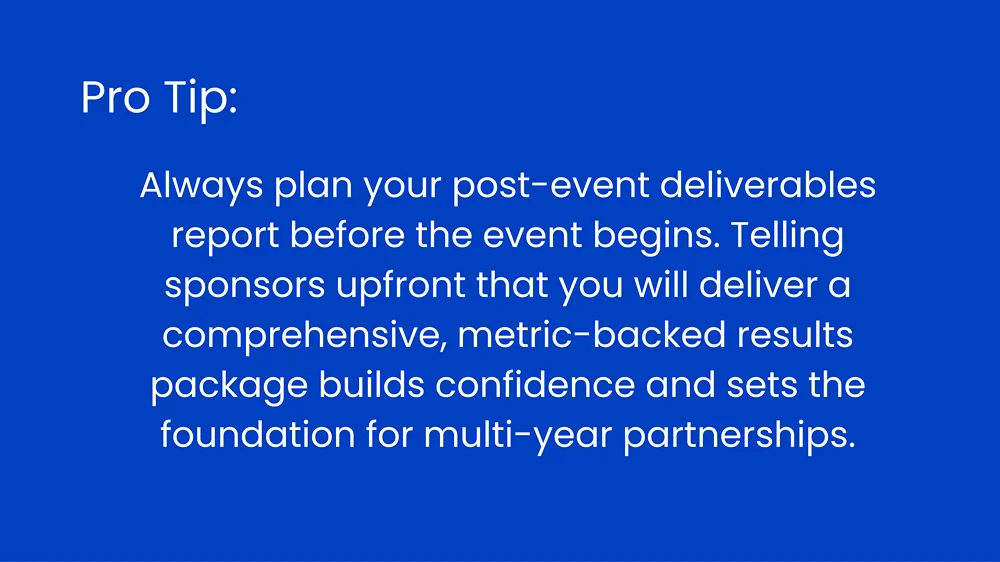
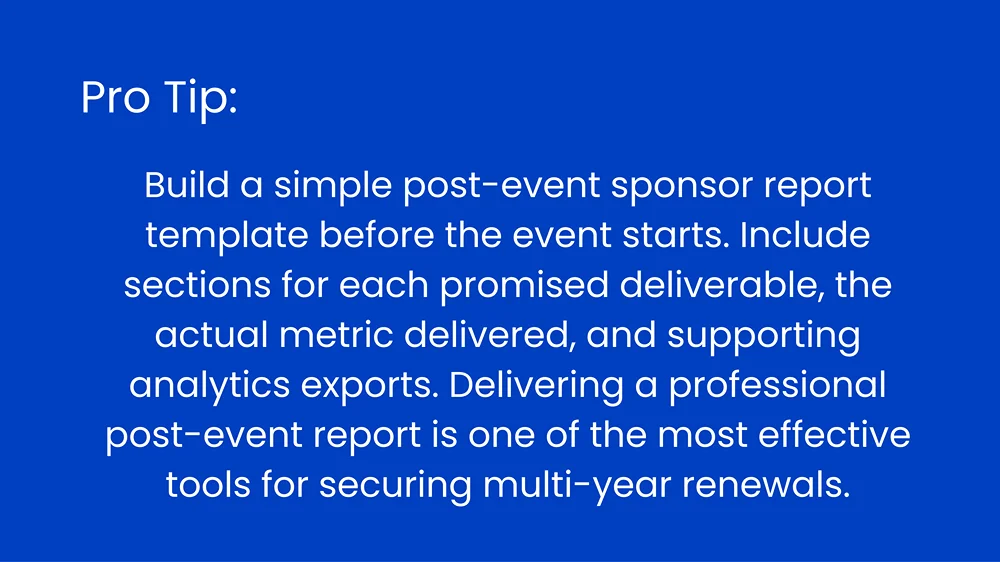
Start with one strong, well-researched prospect. Customize every element to their specific situation. Follow up professionally and persistently. Deliver on every commitment you make, and document the results in a post-event report that makes renewal an obvious decision.
The brands that will fund your event are out there. Make sure yours is the proposal they say yes to.
You’ve built something worth sponsoring. Now build the proposal that proves it.
You know your event delivers. But landing the right sponsors and keeping them takes more than a great pitch. It takes a system.
SponsorCX provides you with the tools to manage every sponsor relationship, track every deliverable, and deliver post-event reporting that makes renewal an easy yes.
The brands that will fund your event are making decisions right now.
Start your free SponsorCX demo today and see how the world's top event organizers turn great events into lasting partnerships.