
After weeks of back-and-forth calls and emails, a festival director finally heard back from a national beverage brand. The sponsor liked the idea but “didn’t see a strong connection to our goals.”
It’s a familiar story — great audience, great energy, but a weak proposal. Most list features without showing benefits. They sell visibility instead of value.
In this guide, we’ll break down what makes a proposal rise above the clutter. Because the difference between a polite “no thanks” and a multi-year partnership often comes down to what’s on the page.
The fix isn’t design. It’s clarity. It’s showing brands exactly why partnering with you helps them win.
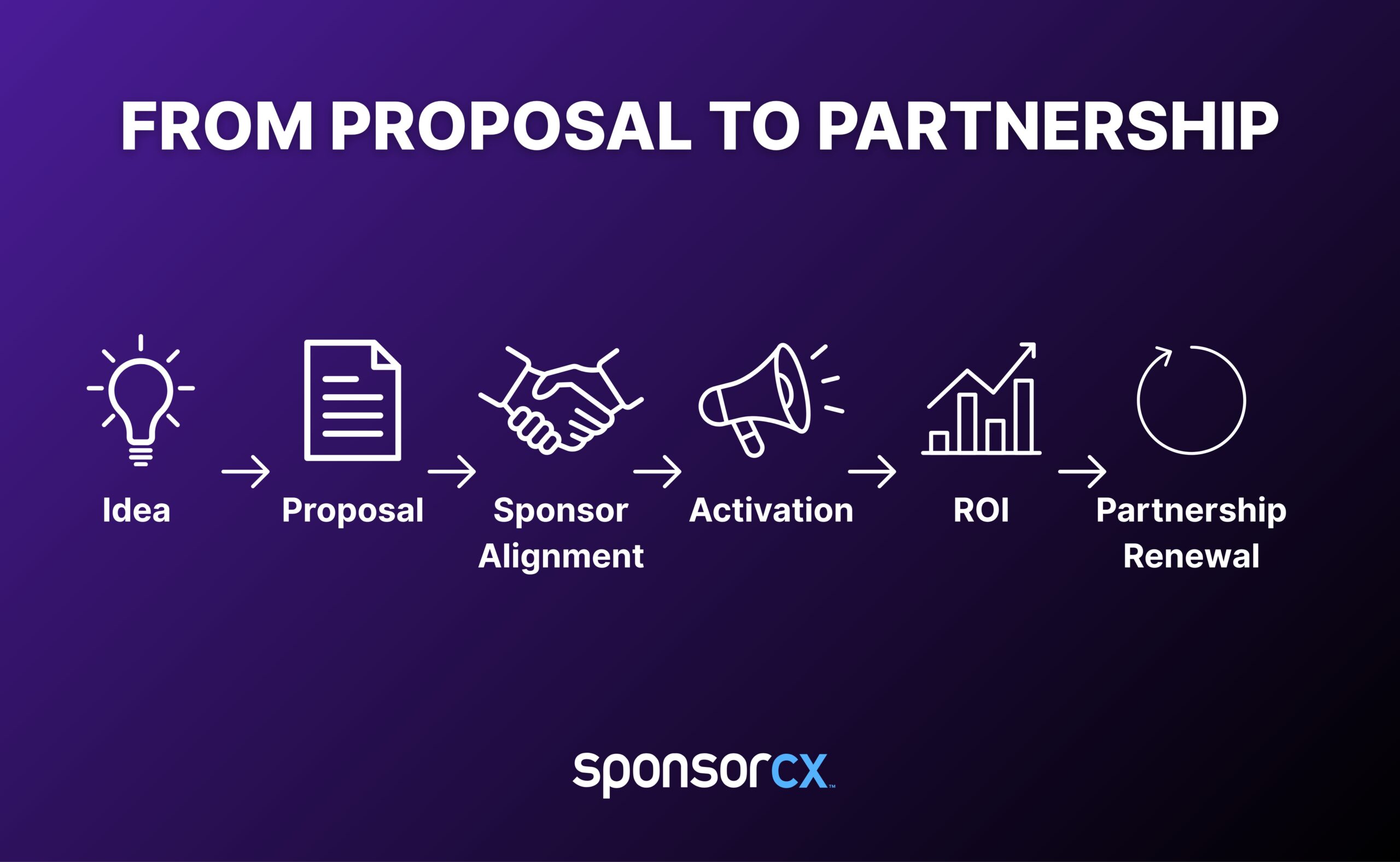
What Makes a Sponsorship Proposal Compelling?
Sponsors see dozens of proposals every week, all promising “exposure” and “brand alignment.”
What separates the ones that get deleted from the ones that get a call back isn’t luck or a flashy deck. It’s following best practices and understanding what the sponsor is buying. Sponsors don’t want a logo on a banner; they want to reach people who care about their brand.
The Essential Elements of a Winning Sponsorship Proposal
Two proposals land on a sponsor’s desk. Both events draw similar crowds, both offer signage, social posts, and on-site exposure. But only one wins.
The difference? The winning proposal feels organized. It tells a story with logic. The sponsor doesn’t have to dig to understand who the audience is, what they’ll get, or why it matters.
When your proposal follows a clear flow, sponsors read it like a roadmap, not a riddle. Here’s how to build one that earns a “yes.”
- Introduction & Mission Statement. Start with who you are and why you exist. One or two sentences can do the job:
“We’re a regional surf festival that brings 20,000 fans together each summer to celebrate coastal culture and ocean conservation.”
- Audience Insights and Demographics. Your audience is your product. Describe who they are, where they’re from, what they care about, and why they matter to the sponsor.
Numbers count here, but context counts more.
“Eighty percent of attendees live within 50 miles of our venue, and 60% follow at least one surf or outdoor brand.” That tells a sponsor where they fit.
- Your Unique Selling Proposition (USP). Your unique selling proposition differentiates you from competitors.
“We reach a core audience of action-sports fans that national campaigns rarely touch. They’re not spectators. They live the lifestyle.”
That’s a USP sponsors can’t find in a spreadsheet.
- Sponsorship Packages and Pricing. Every sponsor expects to see options, but how you present them says a lot about your professionalism.
Avoid the tired gold, silver, and bronze tiers. They scream “template” and make your proposal feel generic. Instead, name packages around outcomes, experiences, or audience access:
- Community Partner: Designed for local engagement and on-site visibility.
- Brand Experience Sponsor: Includes digital activations and interactive booth space.
- Title or Presenting Partner: Offers full event integration and category exclusivity.
Offer a flexible range: “Partnership levels typically range from $10,000–$50,000 depending on scope.” It invites discussion instead of sticker shock. Sponsors like flexibility. It shows collaboration.
- Sponsorship Opportunities & Benefits. List your tangible assets including signage, social media integration, hospitality, merchandise tie-ins. Then connect each to marketing value.
“Your logo on banners” becomes “Your brand featured in the main entry area, seen by 10,000 attendees.””
Translate exposure into impact.
- Activation Ideas & Creative Concepts
Sponsors want ideas, not line items. Offer creative sparks:
“Host a hydration station powered by your brand,” or “Create a co-branded giveaway.”
- Proof of Performance / ROI. Data closes deals. Include results like audience reach, media impressions, or engagement rates. Even better, show how you track them:
“All metrics reported through digital dashboards and post-event recaps.”
These fundamentals line up with what industry experts identify as key elements of a winning proposal.
- Contact and Next Steps. “Let’s schedule a quick conversation to explore how this partnership can meet your marketing goals.”
Short. Direct. Professional.
When you present your proposal in this order, you do more than inform, you guide. You connect the dots so your prospective sponsor doesn’t have to.
That’s the difference between a deck that gets a polite “we’ll review it” and one that gets fast-tracked to the decision-maker.

How to Tailor a Proposal to Each Sponsor’s Goals
Here’s where most proposals crash and burn. Someone builds a nice-looking deck, fills in the blanks, changes the logo, and fires it off to ten companies. Fast? Sure. Effective? Almost never.
A winning proposal feels like it was written for one brand, that’s because it was.
Start by studying the sponsor’s world. Look at its website, ads, and social channels. What do you learn about what’s important to them? What audiences is it trying to reach?
Once you know that, rewrite your value statements in its voice.
- If the sponsor leans into sustainability, highlight your recycling initiatives or eco-friendly event setup.
- If it cares about youth engagement, show how your platform connects with younger fans.
- If it’s chasing digital reach, focus on online impressions and engagement metrics.
A good proposal says, “Here’s how what we offer helps you hit your goals.”
Here’s a quick comparison:
Generic: “We’d love to feature your brand on our event signage and social media channels.”
Tailored: “Your logo placement and sponsored post campaign would put your brand in front of 25,000 active outdoor enthusiasts. It’s a perfect overlap with your ‘Live Wild’ marketing push this summer.”
That second line does something subtle but powerful: it connects your audience to its campaign. It shows effort, understanding, and alignment.
Because at the end of the day, sponsors aren’t looking for proposals; they’re looking for partners who get them. And if your proposal reads like it was built just for them, you’ve already made it halfway to “yes.”
How to Demonstrate ROI and Value
Picture a sponsor flipping through a proposal that looks great but says nothing measurable. There are colorful charts, maybe a few buzzwords like “massive exposure” or “strong impressions.” But no one explains what those mean, or how the sponsor will know if the partnership worked.
That’s the deal killer.
When a brand invests in you, they’re not just buying space, they’re buying evidence. They want to see that you can deliver measurable impact and report it back in a way their bosses understand.
That’s where your proposal can do the heavy lifting.
Start by defining what “return” means in your world. It might be social engagement, event attendance, coupon redemptions, lead generation, or website visits. Then show how you’ll track it. Be specific:
“We measure engagement using post-event surveys, QR code scans, and social media analytics. Sponsors receive a full report with reach and interaction data.” Show you understand that measurement and data matter.
Don’t shy away from storytelling either. Data proves performance, but stories create memory. Pair the metrics with a short example:
“Last year, our beverage partner’s sampling booth served 2,000 attendees and saw a 12% lift in local sales within four weeks.”
That’s tangible. It ties results directly to brand goals.
The key is credibility. Include numbers you can back up, visuals that clarify rather than clutter, and clear reporting timelines. Promise what you can deliver. Deliver what you promise.
When your proposal balances analytics and authenticity, it stops being a request and starts looking like a business plan. And that’s when sponsors stop asking, “Is this worth it?” and start saying, “When can we sign?”
Common Mistakes to Avoid
By now, you know what a strong sponsorship proposal looks like. But what the ones that miss the mark? Here are the most common mistakes you’ll want to avoid.
- Making It About You, Not Them. This is the number-one killer. Too many proposals open with “We’re excited to share our amazing event.” The sponsor’s first thought? “So what?”
Flip the script. Lead with their goals, their customers, and their potential outcomes. Make your story the bridge to their success.
- Using Vague or Empty Language. Phrases like “great exposure” or “excellent brand alignment” sound impressive but mean nothing. Replace them with specifics.
Instead of “Your brand will get exposure,” say “Your brand will appear in front of 10,000 attendees and 50,000 online impressions.” Precision builds credibility.
- Sending the Same Proposal to Everyone. If sending out generic PDFs, you’re making a big mistake. Sponsors can spot a recycled pitch instantly. Take the time to customize. Even a few tailored sentences show effort and respect.
- Ignoring ROI. Failing to explain how you’ll measure success tells the sponsor you might not know if it worked — and that’s fatal. Always include metrics, methods, and timelines for reporting. It doesn’t have to be complicated. It does have to be clear.
- Bad Design or Cluttered Layout. If your proposal looks like text from an instruction manual, no one’s reading it. Keep paragraphs short, use visuals sparingly but strategically, and make sure your logo placement and formatting scream professionalism. If you’re ready to upgrade your activation game, check out four activation tips from our blog.
- No Follow-Up Plan. You hit send, then wait. Weeks go by. Nothing.
Always plan your follow-up before you send the proposal. Two polite check-ins are better than none. Persistence often wins where design doesn’t.
Mistakes don’t always kill a good opportunity, but they weaken your credibility — and credibility is everything in sponsorship. Keep your proposal focused, factual, and sponsor-centered. That’s how you stand out in a sea of sameness.
A Real-World Example
A few years back, a local minor-league baseball team wanted to land a regional grocery chain as its title sponsor. The team had loyal fans and strong attendance, but every proposal they sent out hit the same wall — polite rejections with lines like “Not aligned with our marketing focus right now.”
The team assumed the grocery chain wanted big reach. So, it offered scoreboard signage, program ads, and a giant banner in left field. None of it landed.
When the sales team finally sat down with the brand’s regional marketing director, they discovered the real objective wasn’t exposure. It was community engagement. The brand had just launched a “Fresh Local” campaign and wanted ways to connect with families.
That changed everything.
The team rewrote its proposal to highlight family-night promotions, youth baseball clinics, and branded produce giveaways. It contained audience data including household income, family attendance rates, and survey feedback about healthy eating. And they closed the pitch with one clear line:
“Together, we can turn every home game into a local celebration of food, family, and fun.”
That was the turning point. The grocery chain signed a two-year deal.
See how the Valero Alamo Bowl streamlined its sponsorship workflow with SponsorCX. That’s what a winning proposal does. It doesn’t just ask for money. It connects purpose to performance.
Turn Your Proposal into a Partnership
If you’ve made it this far, you already understand something most sponsorship seekers miss: the best proposals don’t just sell spots. They build stories.
Every section of your proposal is a chance to show a brand that you understand its goals, respect its time, and share its values. When done right, you stop sounding like you’re asking for a hand-out and start sounding like a strategic partner.
Because sponsorship isn’t charity. It’s collaboration. Brands don’t want to “help you out.” They want to align with people and properties that make them look smart, relevant, and connected to real audiences.
So, before you send your next pitch, pause and ask:
- Does this proposal speak their language?
- Does it show measurable value?
- Does it feel like an invitation or an invoice?
If you can answer “yes” to those questions, you’re not just chasing sponsorships, you’re forming partnerships.
And if you want a head start, use this guide as your framework. Build a clean, clear, sponsor-focused proposal that tells your story through their goals. That’s how deals get done and how relationships last longer than a season.

FAQs: Sponsorship Proposal Best Practices
- What’s the ideal length of a sponsorship proposal?
Keep it tight. Four to five pages or roughly 1,500 to 2,000 words is enough to show value but not enough to bore. Sponsors want clarity, not volume. Include visuals where they help explain audience reach or ROI.
- Should I include pricing in my proposal?
Yes, but think in options, not totals. Offer sponsorship to create custom packages based on brand goals. Leave room for flexibility. Sponsors appreciate choices, not ultimatums.
- How soon should I follow up after sending a proposal?
Give your prospect three to five days to evaluate. Keep your follow-up brief and professional:
“Just checking to see if you had a chance to review the proposal. We’ve got some powerful ideas about how we can help you achieve your yearly marketing goals.” Respectful persistence beats silence every time.
- How detailed should my activation ideas be?
Detailed enough to intrigue, but flexible enough for adjustments. Think direction, not roadmap. For example, “fan engagement station” beats “10×10 booth with branded tent and staff of three.” You want them intrigued, not locked in.
- What’s the most common reason proposals fail?
They don’t connect the sponsor’s objectives to the property’s audience. It’s not about you. It’s about how you can help your sponsor win. Miss that connection, and even a great opportunity gets passed over.
- Can I use one how to write a sponsorship proposal template for multiple brands?
You can. But don’t. Templates are for structure, not duplication. Personalization is everything. Adjust the tone, the audience data, and the activation ideas for each sponsor you contact. Willingness to customize translates to credibility.
Final Tip: Your proposal should feel like a conversation starter, not a contract. The best sponsorships evolve from collaboration, and every well-written proposal opens that door.
Let’s Build Your Next Great Sponsorship Story Together
You’ve got the audience. The passion. The story worth sponsoring. Now it’s time to bring it all together with a platform built to make your next partnership pitch your best one yet.
SponsorCX helps you move from spreadsheets and stress to clarity and control. From chasing deliverables to tracking them with confidence. From one-off proposals to long-term relationships that renew year after year.
You don’t need to figure it out alone, you just need the right guide.
Let’s talk about how SponsorCX can help you manage, measure, and maximize every sponsorship deal.
Reach out today and start turning your proposals into partnerships that perform.